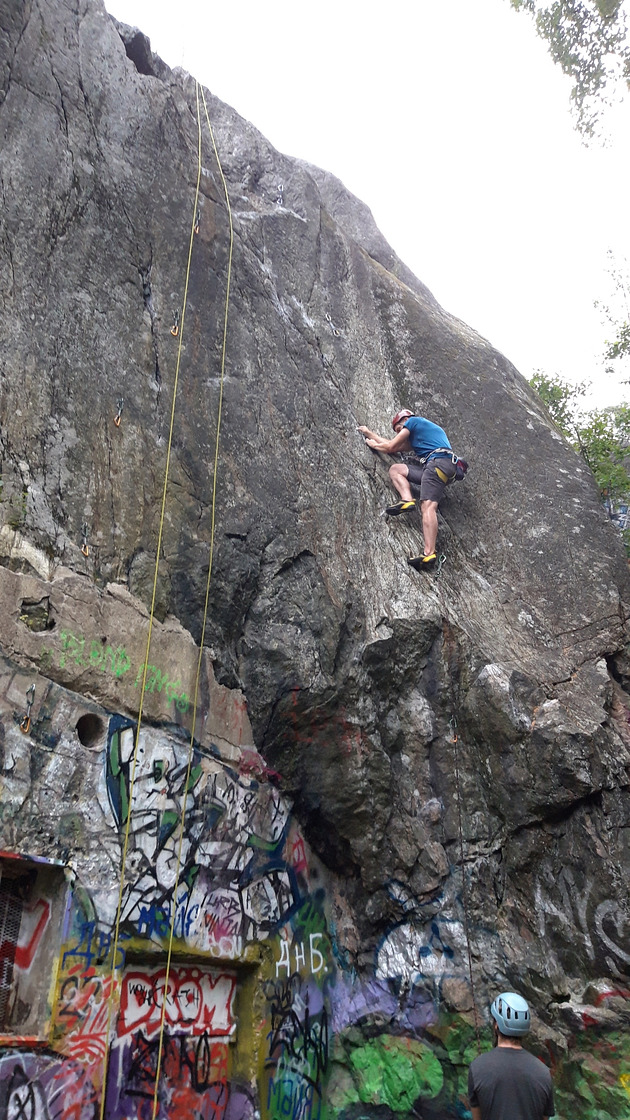
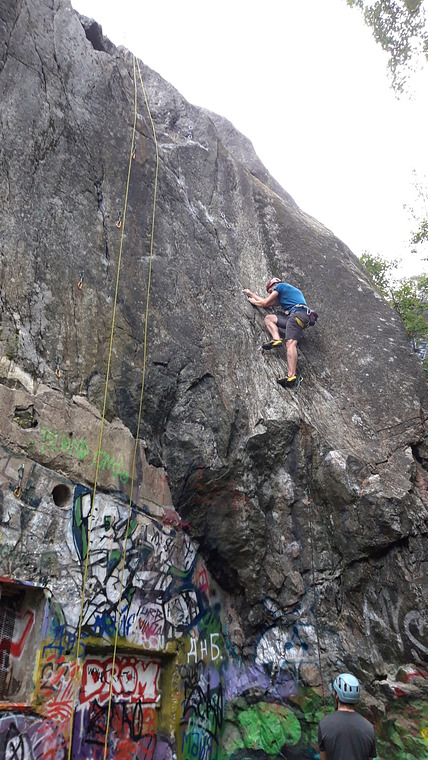
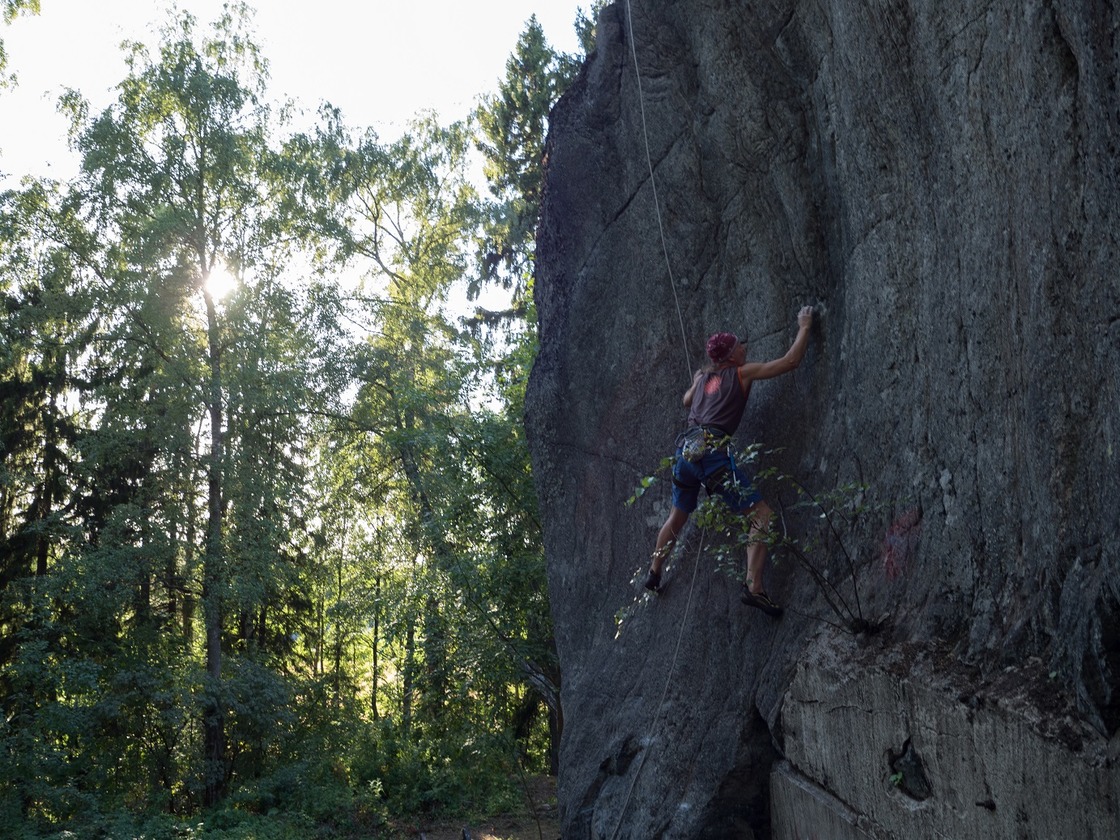
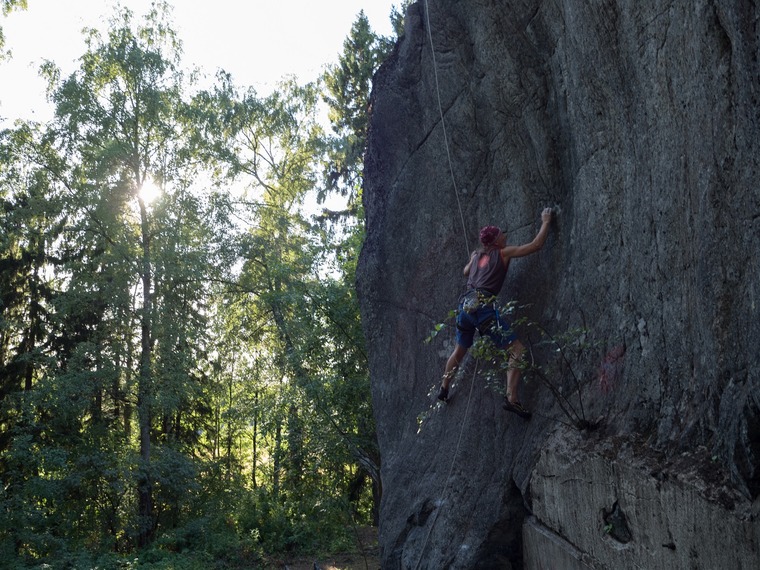
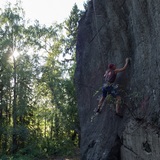
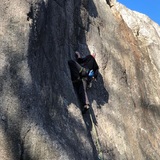
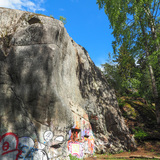
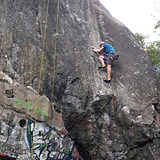
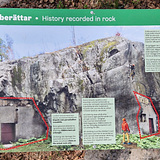
Urban crag in Helsinki. Lots of urban traffic and graffiti. In the cliff faces of the crag, there are multiple concave giant's kettle-like shapes, and its nearly treeless top can be seen from a lot of the nearby fields. The rock quality is smooth and shaped by the melt-water from the last ice age's glacier, but even then the stubborn Finnish granite decides to be sharp at places.
The sun shines onto the crag for a while during the midday. Some of the routes dry quickly, while Happo, Seteli and Viivat take some time to dry (2-4 days in summer). The landing is flat and easily traversable. The grove in front of the cliff faces is protected as a nature conservation area.
The climbing history of Pommikallio is long. The old pitons date back to 1950's aid climbing era. There are some old bolts from the 90's placed for top rope anchors. The burly overhang was climbed on aid (A1/A2) in 1955 by Matti A. Jokinen and Kari Eskola.
First free ascents of the most obvious routes were done in 1984 once Kim Pennanen found the place again and Ilkka Paloheimo did the first ascent of Hangdog (6+). At that time they had no knowledge of Jokinen's ascents before them.
Sport climbing era started in the 2010's. The bolting philosophy was to make easily accessible and well protected safe "klettergarten" for the new sport climbing generation. There is some distance between the bolts especially in the top part to respect the work of earlier generations. The central cracks have been left unbolted for highball bouldering and trad climbing.
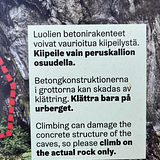
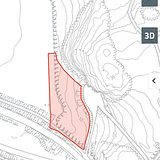
The forest towards the Viikki field has a restriction of movement and is protected by law. The cliff itself became a part of Hallainvuori conservation area on 23.10.2023. The two caves are also protected by law. The caves date back to pre First World War era.
Please clean all trash! Including your trash and the trash left by others.