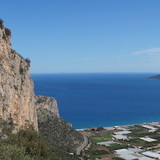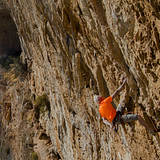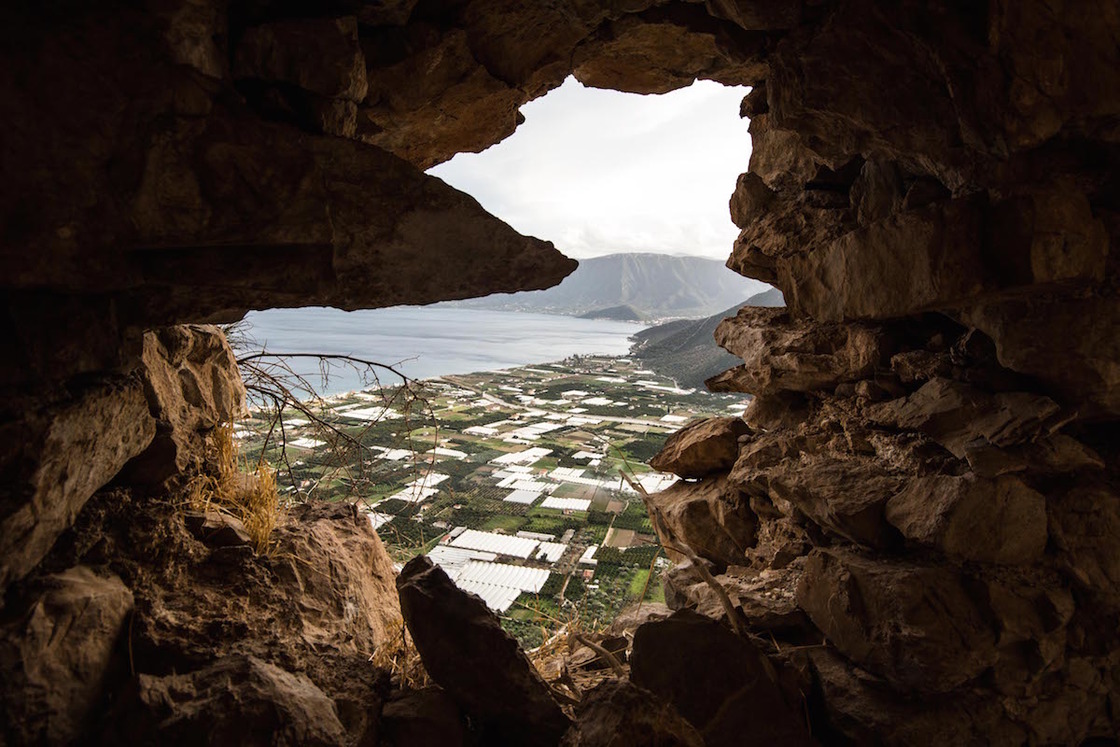
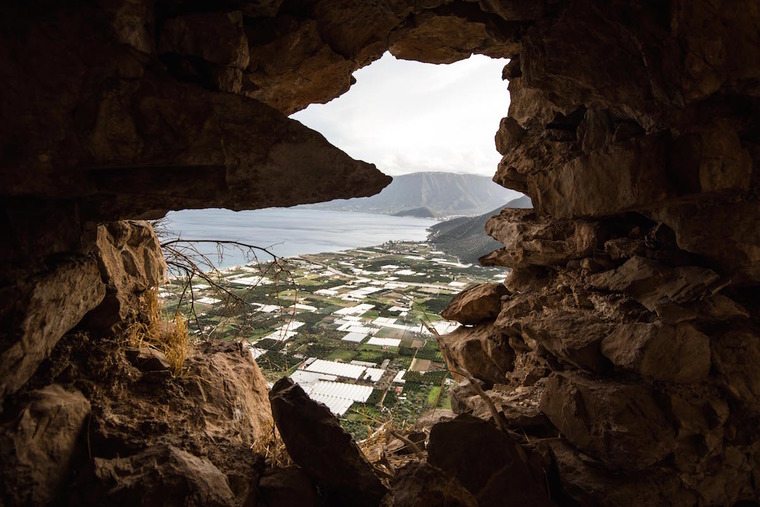
All of these sectors offer a stunning sea view, paired with sunny climbing ranging from easy slabs to unique, overhanging tufa fortress multi-pitches. These beige-grey walls will be the first and last big rock faces you see on your journey to and from Leonidio.
The original Tsakonian name of the area above the agricultural fields of Lakkos is Troúmpa Kordéles.
Cave of Panagia
This sector can essentially be divided into two sections
The lower part, a slabby area where you belay from the ground.
The upper overhanging part, accessed either by, climbing one of the routes with a higher anchor and belaying your second like on a multipitch, or ascending the fixed ropes coming in from the right.
The lower section offers very easy slab climbing on "broccoli" features.
From the ledge, a curtain of tufas rises, home to a collection of classic lines mostly in the 6c to 7a range, ideal terrain for learning or refining tufa technique.
Important: Take care if someone is climbing above you, tufas are known to break, especially after rain when they become soaked and weakened
Mad Wall / Piccolo Muro
This section of the wall features some of the easiest climbing in Leonidio, making it a favorite among beginners and visiting climbers.
Expect grey slabs with plenty of crimps, jugs, flakes, and side-pull features, the perfect place to kick off your climbing career.
Yellow Wall
The most accessible part of the cliff impresses with its variety of climbing styles.
On the right, you'll find overhanging, powerful routes on tufas and crimps. On the left, the wall offers long, technical vertical climbs on plenty of tufa and "broccoli" features.
If you've already honed your tufa skills in the Upper Cave of Panagia, this is your next level challenge.