☀️ SUN DURING THE DAY:
• Only in the late afternoon
📱 PHONE SIGNAL:
• YES
🧭 EXPOSURE:
• From North-West to North-East
🧱ROCK TYPE:
• The rock here is from low quality to good quality limestone
📆 BEST PERIOD:
• Spring and Autumn, but still possible to climb all year round
👪 FAMILY FRIENDLY:
NO
⛰️🇬🇧
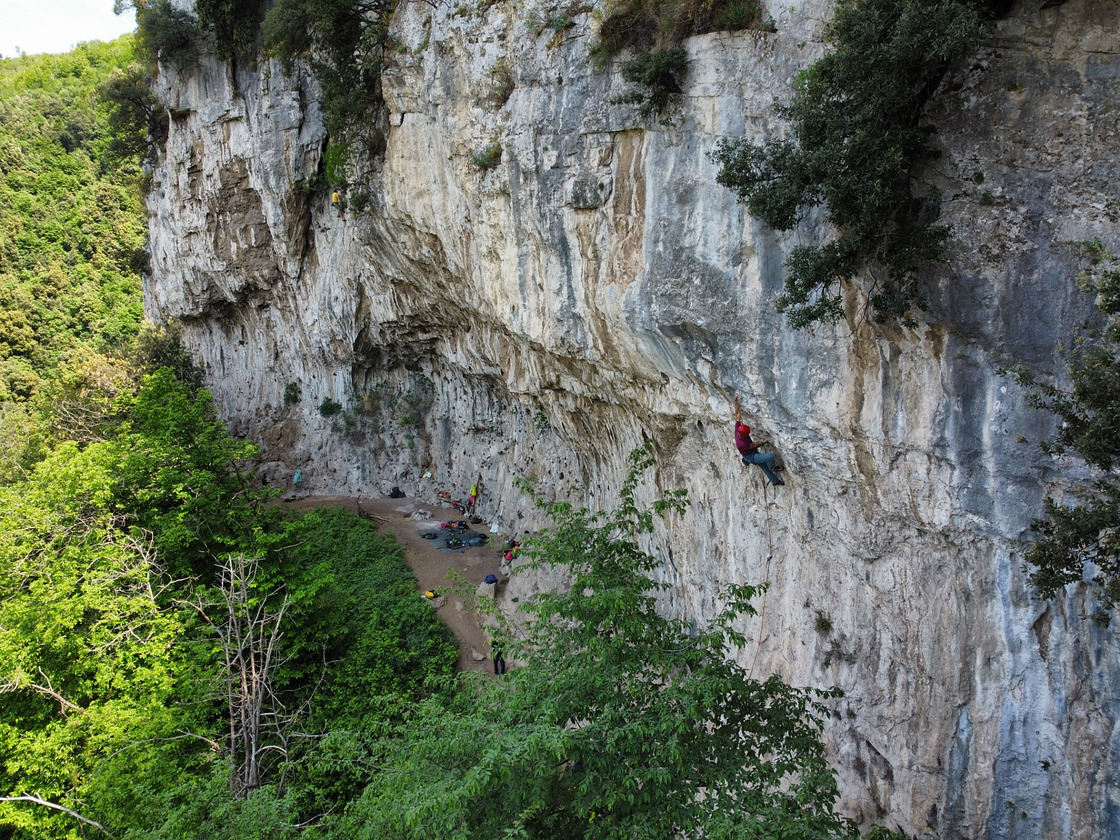
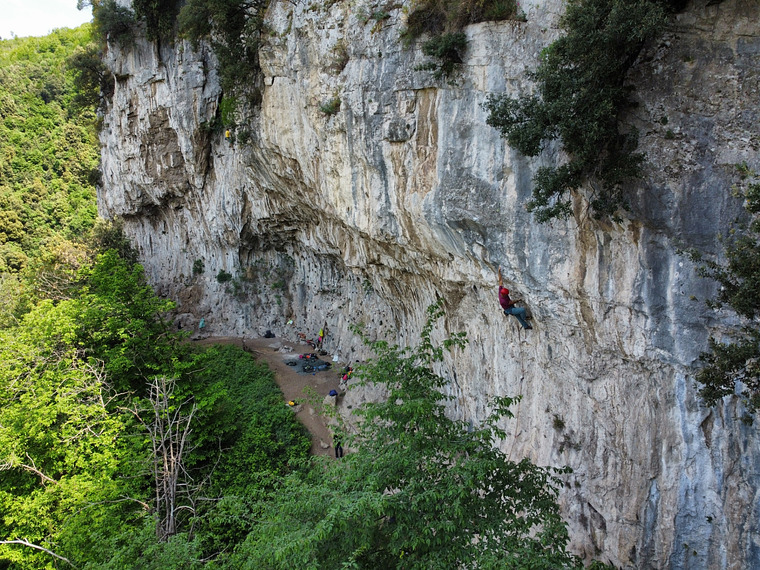
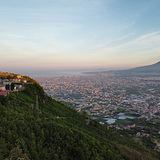
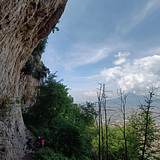
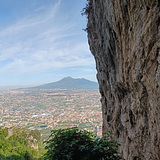
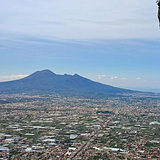
The Lettere crag (later renamed Pompei Crag) is located near the medieval village of Lettere, nestled in the Lattari Mountains of Campania, just a few kilometers from Castellammare di Stabia. It offers a stunning natural setting, surrounded by greenery, with views over the Sarno Valley and, in more open spots, glimpses of Mount Vesuvius.
The area is peaceful and wild—ideal for climbers seeking a nature-immersed experience far from mass tourism. Thanks to its predominantly north and northeast-facing walls, the crag is suitable for climbing even during the hotter months and is accessible almost year-round. The nearby village is home to the Castle of Lettere, a 10th-century fortress with crenellated walls and panoramic towers offering breathtaking views of the Gulf of Naples.
🧗🏼♀️Historical Sector “Lettere”
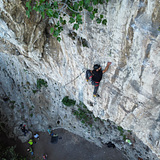
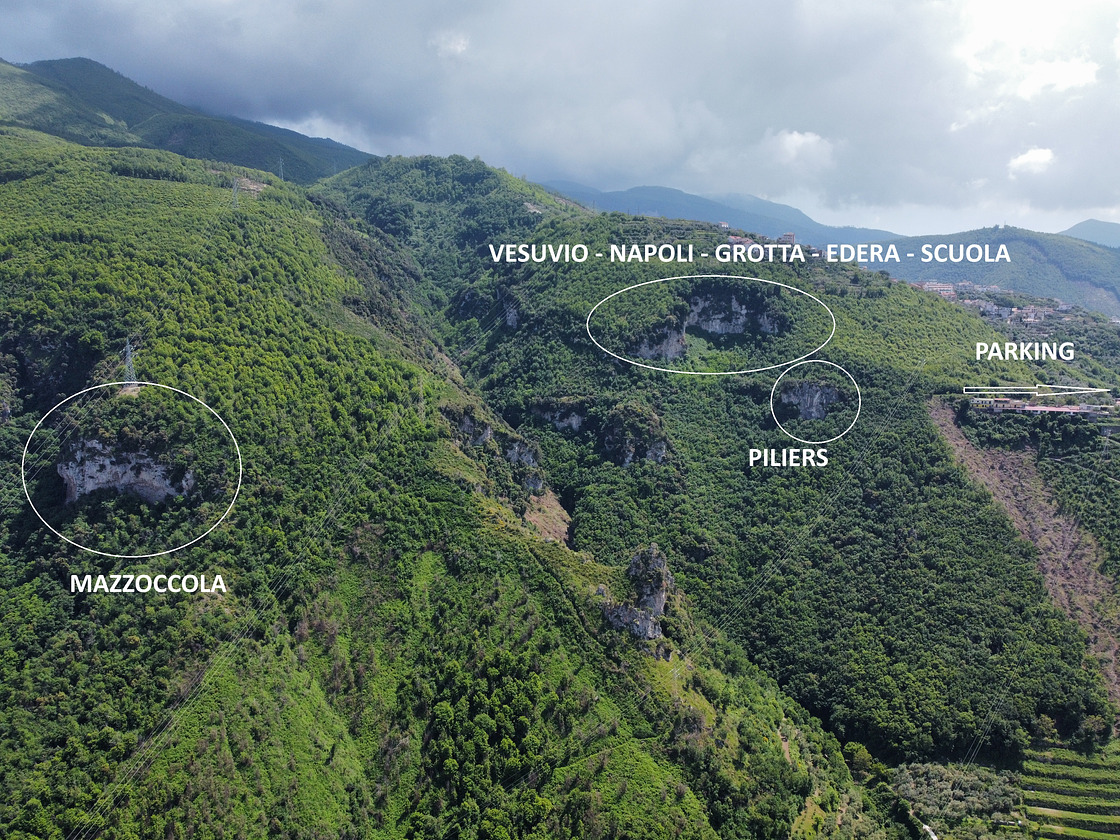
The area is divided into sub-sectors—Vesuvio, Napoli, Grotta, Edera, Scuola, and Piliers—to make navigation easier. However, all the routes are located along the same wall, adjacent to the Grotta di San Benedetto, forming an arc with exposure ranging from northwest to northeast, which allows for climbing at any time of the day. The Piliers sector is located lower down, on a grey limestone pillar that emerges below the main path.
The routes climb a varied limestone face, featuring vertical slabs, slightly overhanging walls, corners, and a few roofs. The environment is airy and quiet, with good shade during the central hours of the day.
Climbing styles vary, from technical slab moves to short but intense athletic overhangs.
Grades range from 5b to 7b+, with both beginner-friendly and highly technical routes available.
A free guidebook, with real-time updates on maintenance work, is available on the website of bolter and developer Francesco Galasso: direzioneverticale.it.
🧗🏼♀️New Sector “Mazzoccola”
This is the wildest sector of the crag. Dense vegetation and natural shade make it perfect for summer climbing.
The wall forms a natural amphitheater, with tall routes that are sometimes slightly overhanging or vertical, requiring strength and precision.
Many routes are physically demanding, with continuous sequences and powerful moves. Grades tend to be higher here, ranging from 6c to 8a, and some of the hardest and most modern lines in the area are located in this sector.
Bolting is modern and carefully designed to ensure safety, especially on more exposed climbs.
⛰️🇮🇹
La falesia di Lettere (successivamente rinominata falesia di Pompei) si trova nei pressi del borgo medievale di Lettere, situato tra i Monti Lattari, in Campania, a pochi chilometri da Castellammare di Stabia. Offre un ambiente naturale suggestivo, immerso nel verde, con vista sulla Valle del Sarno e, nei punti più aperti, scorci sul Vesuvio.
L’area è tranquilla e selvaggia, perfetta per chi cerca un’esperienza di arrampicata immersa nella natura e lontana dal turismo di massa. Il clima, grazie alle esposizioni prevalentemente nord e nord-est, è favorevole nei mesi più caldi, rendendo la falesia arrampicabile quasi tutto l’anno. Il paese ospita inoltre il Castello di Lettere, una fortificazione del X secolo circondata da mura merlate e torri panoramiche, da cui si gode una vista spettacolare sul Golfo di Napoli.
🧗🏼♀️Settore storico “Lettere”
L’area è suddivisa nei settori Vesuvio, Napoli, Grotta, Edera, Scuola e Piliers per facilitare l’orientamento, ma tutte le vie si sviluppano lungo la stessa parete, adiacente alla Grotta di San Benedetto, formando un arco con esposizione variabile da nord-ovest a nord-est, che consente di arrampicare in qualunque momento della giornata. Il settore Piliers, invece, si trova più in basso, su un pilastro di calcare grigio che affiora al di sotto del sentiero principale.
Le vie si sviluppano su una parete calcarea articolata, caratterizzata da placche verticali, muri leggermente strapiombanti, diedri e qualche tetto. L’ambiente è arioso, silenzioso, con buona ombreggiatura nelle ore centrali della giornata.
Lo stile di arrampicata è vario: si va da movimenti tecnici su placca a passaggi più atletici su brevi strapiombi intensi.
Il grado medio va dal 5b al 7b+, con alcune vie adatte ai principianti e altre decisamente più tecniche.
Una guida gratuita dei settori, con aggiornamenti in tempo reale sui lavori di manutenzione, è disponibile sul sito del chiodatore e manutentore Francesco Galasso: direzioneverticale.it.
🧗🏼♀️Settore nuovo “Mazzoccola”
È il settore più “wild” della falesia. La vegetazione qui è più fitta, e la parete si inserisce in un contesto ombreggiato, rendendolo ideale per l’estate.
La falesia si sviluppa in un anfiteatro naturale, con linee alte, a volte leggermente strapiombanti o verticali, che richiedono forza e precisione.
Molte vie sono fisicamente impegnative, con sequenze continue e passaggi di forza. I gradi sono tendenzialmente più alti rispetto ai settori menzionati in precedenza: da 6c fino all’8a. Alcune delle linee più dure e moderne di tutta la falesia si trovano proprio qui.
La chiodatura è moderna, con particolare attenzione alla sicurezza e alla protezione delle vie esposte.