🚶♂️ 15-18' - ⛰️ 460-480 MSL - 🧭 S / SW
☀️ Almost all day / Quasi tutto il giorno
🇬🇧/🇺🇸
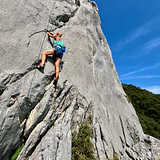
Castello di Gaino is a climbing area located on the southern slopes of Monte Castello di Gaino. The place is historically known for the classic and adventurous multi-pitch “Cresta Sud-Ovest”, an easy ridge route that follows the mountain’s crest all the way to its summit at 870 meters. A detailed description of this line is included elsewhere in the guide.
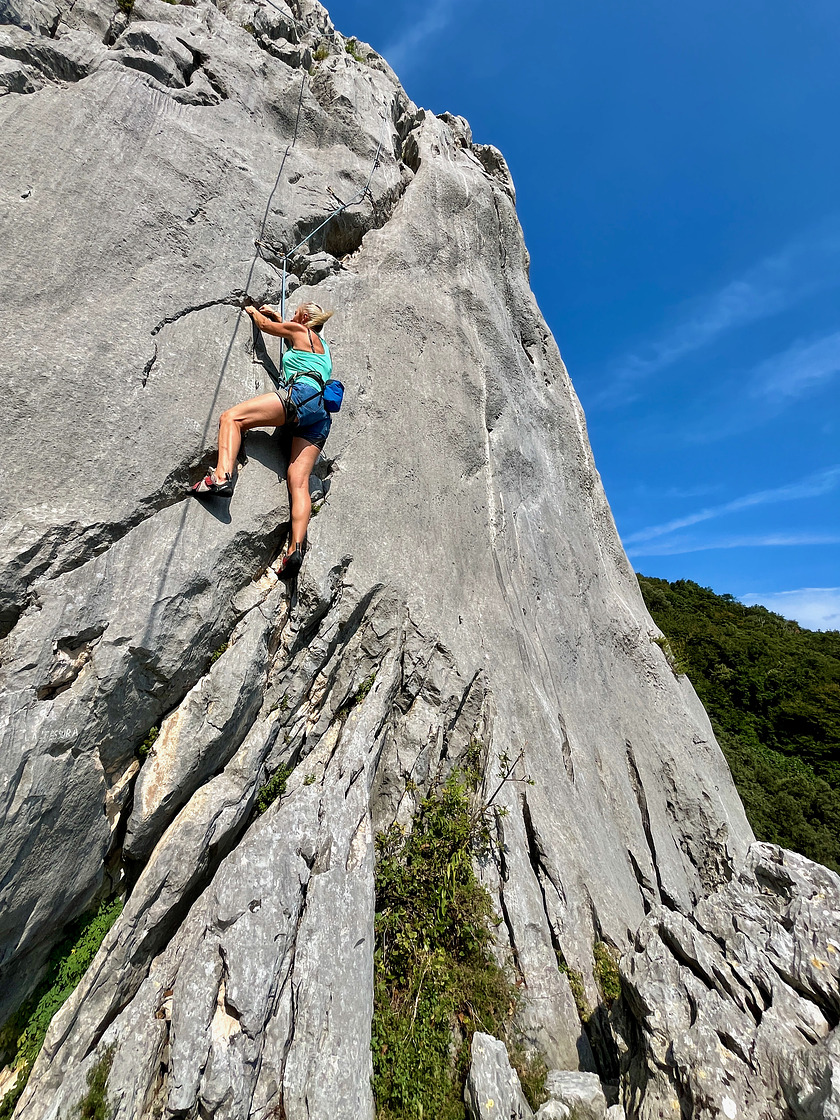
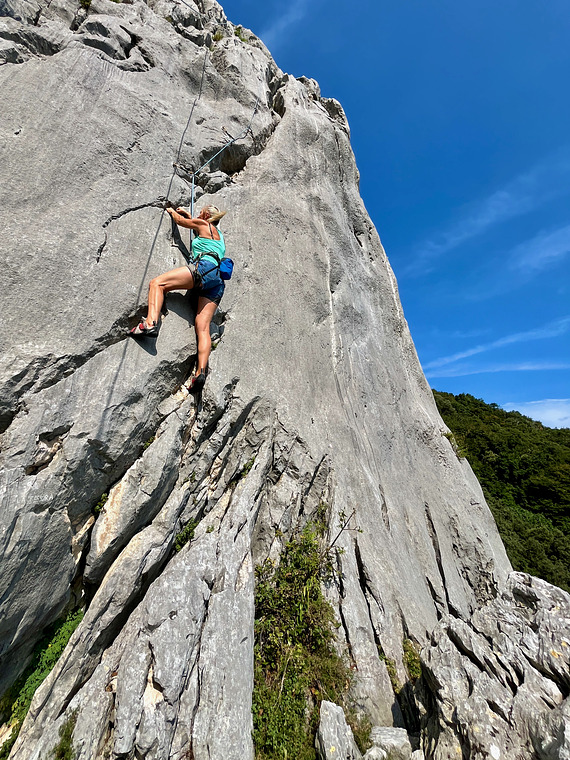
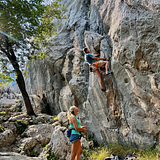
Beyond this historic outing, the area also offers several sport-climbing sectors, featuring vertical walls and slabs of compact grey limestone. The rock quality is excellent, though decades of traffic have polished certain routes, especially in the easier grades.
The climbing is organized into three sectors:
• Main Sector: the most popular, featuring 23 routes, some of which have second-pitch extensions. Grades span 5c to 7c. Many lines are beautiful and well-bolted, but expect polished holds on the most-traveled climbs.
• Sector 2: home to 12 routes from 4c to 6a, plus a surprising 7c on a smooth, technical slab. This is also the area where the Cresta Sud-Ovest begins its journey along the ridge. Ideal terrain for intermediate climbers and anyone looking for easier pitches in a quiet environment.
• Sector 3: includes 11 routes, again with some second pitches, in the 5c to 6b range. The upper pitches are less frequented and tend to be a bit dusty or dirty, but the rock remains solid and interesting.
Grades at Castello di Gaino are known to be sandbagged: start conservatively and don’t underestimate the pitches here. Bolts are safe overall, though in some routes they are a bit spaced, especially compared to more modern crags.
The best seasons are autumn, winter and spring. The south-facing walls receive sun throughout the day, making the crag warm even in colder months. Summer, on the other hand, is often too hot.
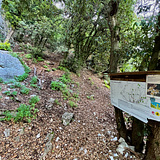
The approach is moderate but fairly long, taking about 15–20 minutes.
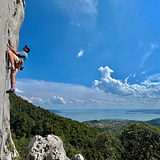
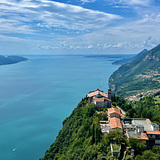
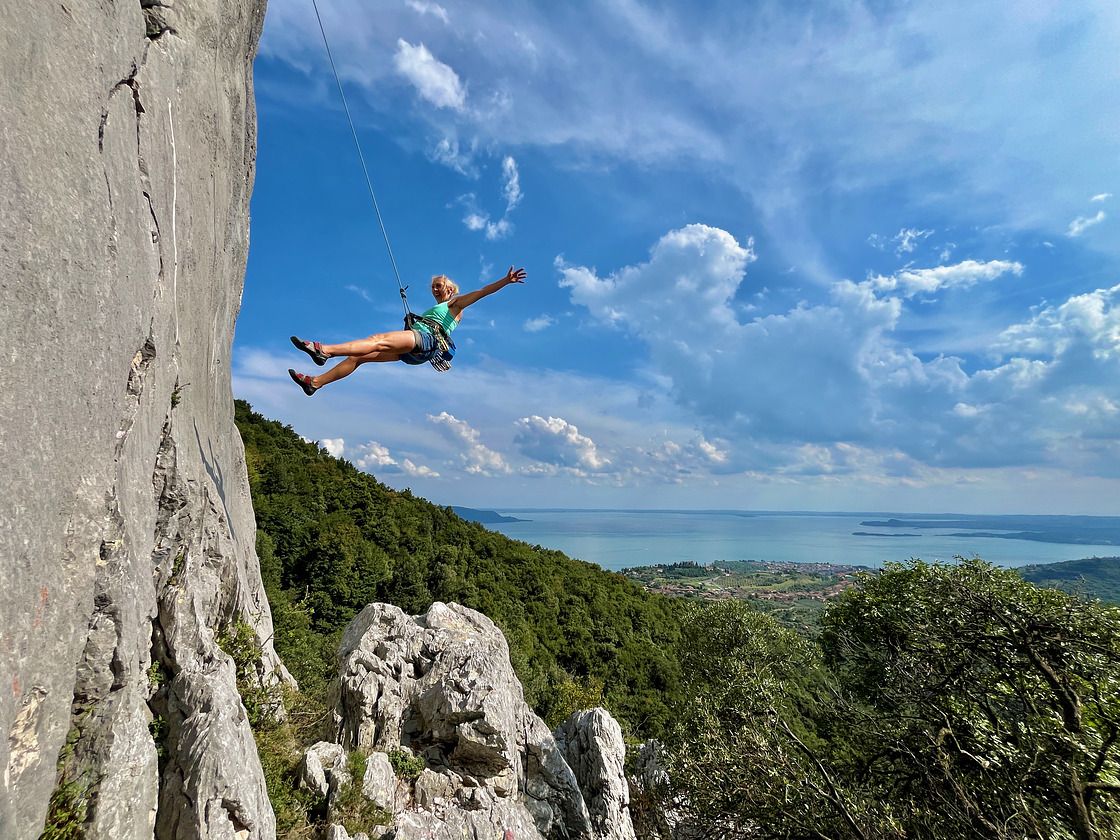
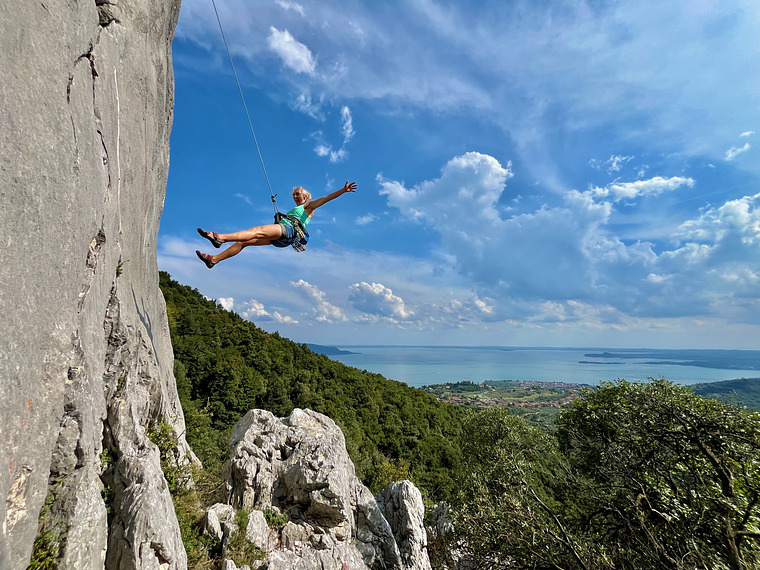
The views from the crag are outstanding, with sweeping panoramas over Lake Garda and the village of Toscolano-Maderno.
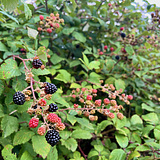
In the right season you might also find a huge patch of wild blackberries by the lower car park (as shown in the photo).
Nearby places worth visiting include:
• the Sanctuary of Madonna di Montecastello, perched on an impressive limestone outcrop about 10 km north.
• the lakeside town of Toscolano-Maderno, perfect for a post-climb stroll or gelato.
🇮🇹
Il Castello di Gaino è una storica area d’arrampicata situata sulle pendici del Monte Castello di Gaino. È nota soprattutto per la classica e avventurosa via “Cresta Sud-Ovest”, un itinerario facile ma spettacolare che segue l’andamento delle creste fino alla vetta a circa 870 m s.l.m. Nella relazione è presente una descrizione dettagliata dell’itinerario.
Accanto a questa grande classica, l’area offre anche diversi settori di arrampicata sportiva su pareti verticali e placche di ottimo calcare grigio. La qualità della roccia è molto buona, anche se gli anni di frequentazione hanno lucidato alcune linee.
L’arrampicata si suddivide in tre settori:
• Settore principale (Main sector): conta 23 linee, con alcuni secondi tiri. Le difficoltà vanno dal 5c al 7c. È il settore più frequentato, con belle linee anche se in parte levigate.
• Settore 2: presenta 12 vie dal 4c al 6a, più un 7c su placca liscia. Da questo settore parte anche la storica via Cresta Sud-Ovest. È terreno ideale per arrampicatori intermedi alla ricerca di vie facili in un ambiente tranquillo.
• Settore 3: offre 11 vie dal 5c al 6b, alcune con secondi tiri. Le lunghezze superiori sono meno ripetute e possono risultare un po’ sporche, anche se la roccia è solida e tutto sommato interessante.
Questa falesia è nota per avere gradi piuttosto “old school” e severi: conviene partire cauti e non sottovalutare i tiri. Le protezioni sono sicure, ma in alcune vie risultano abbastanza distanziate.
Le stagioni migliori sono autunno, inverno e primavera. Le pareti sono esposte a sud e prendono sole durante tutto il giorno, restando calde anche nei mesi più freddi. L’estate può risultare troppo calda.
L’avvicinamento non è troppo impegnativo, ma è abbastanza lungo, circa 15–20 minuti.
Il panorama è mozzafiato: la vista sul Lago di Garda e su Toscolano Maderno è impareggiabile.
Nella stagione giusta si trova anche un’ampia zona di more selvatiche presso il parcheggio inferiore (vedi foto).
Nelle vicinanze (circa 10 km più a nord) merita una visita il Santuario della Madonna di Montecastello, uno dei punti panoramici più belli del Garda.
Consigliata anche una passeggiata o un gelato a Toscolano Maderno, a pochi minuti di distanza.