☀️SUN DURING THE DAY:
• All day, shades are coming in the late afternoon in summer
💧WATER SOURCE:
• YES, but not always open, behind the route "Via Dietro Al Castello"
🧭 EXPOSURE:
• South-East
🧱ROCK TYPE:
•The rock here is Gneiss.
📆 BEST PERIOD:
• It's climbable from March to November, in the Summer the walls are in the shade late afternoon.
👪 FAMILY FRIENDLY:
• NO: Miaroca, Auditorium, Pilastro Rosso, Placche
• YES: everywhere else
📱PHONE SIGNAL:
• YES
🇬🇧
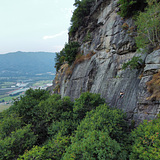
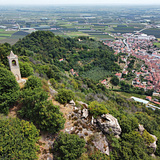
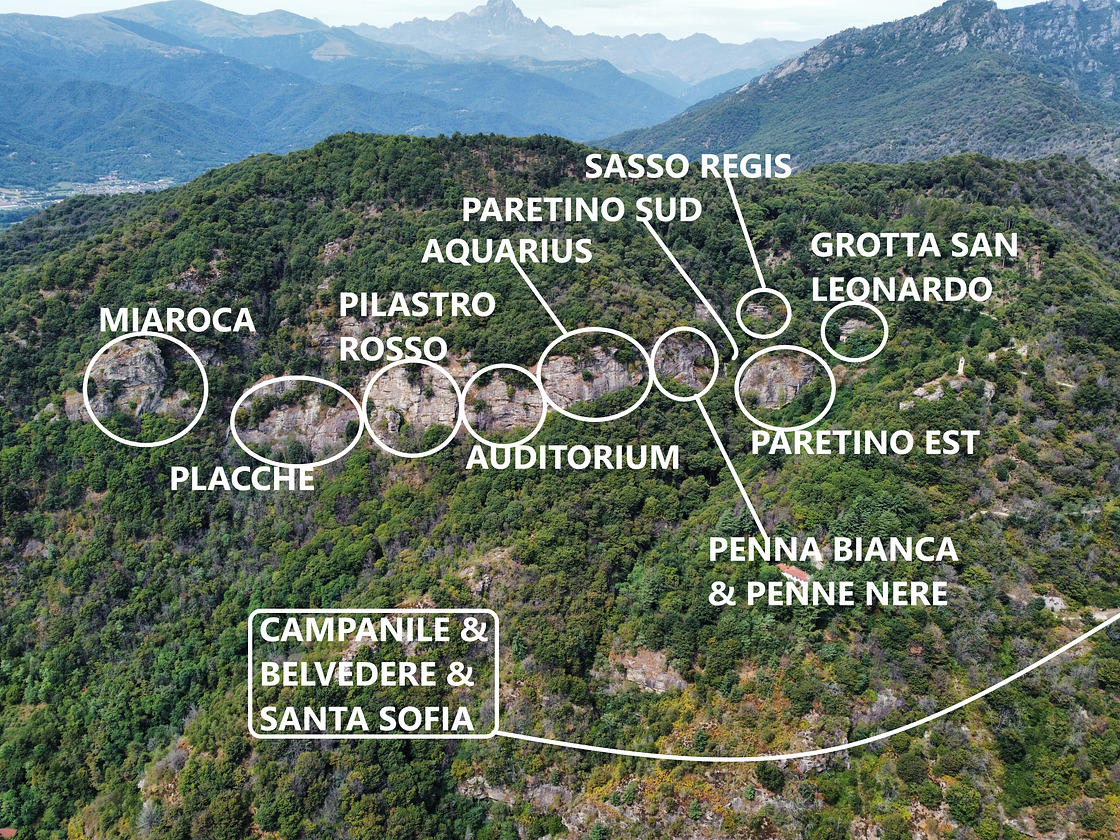
⛰️Revello, at the entrance of the Po Valley, sits at an altitude of 450–500 meters. Climbing here is possible almost all year round thanks to the east, south-east, and south-facing walls, and the smart layout of the sectors ensures at least one shaded area even during the hottest summer days. From the base of the crags – and even more so while climbing – you can enjoy stunning views over the lower valley and all the way to Saluzzo.
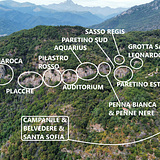
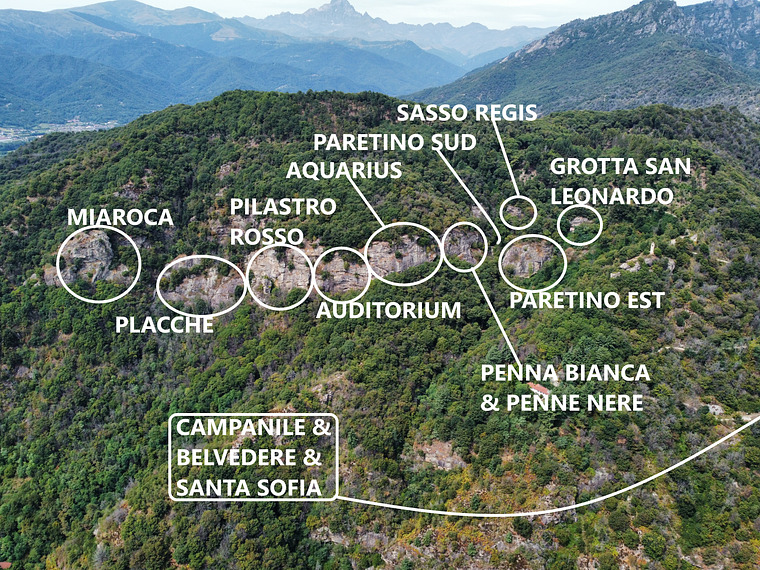
The wide rock band is divided into several sectors, which follow one another along the access path from right to left. The Right Sector, split into two walls with different orientations, offers around 40 routes on superb rock. Just to the left lies Penna Bianca, with slabs and overhangs in the upper section and only a few routes, two of which are multi-pitch. Higher up, perched on a ledge, the small new sector Penne Nere is taking shape, while Aquarius boasts 27 routes ranging from delicate slabs to steep overhangs.
For those seeking more accessible grades, Panorama su Revello offers 20 enjoyable routes, while Auditorium is a more challenging sector, with 20 lines often on steep terrain. El Quezero has 18 routes with varied styles, and Pilastro Rosso, with 16 long and exciting lines, is perfect for those aiming for mid-to-hard grades. Overall, grades range from 4a to 8th, with lines reaching up to 7c and beyond. Most anchors are equipped with chain and maillon or a snap-link, while routes require between 6 and 15 quickdraws, with lengths from 10 to 35 meters.
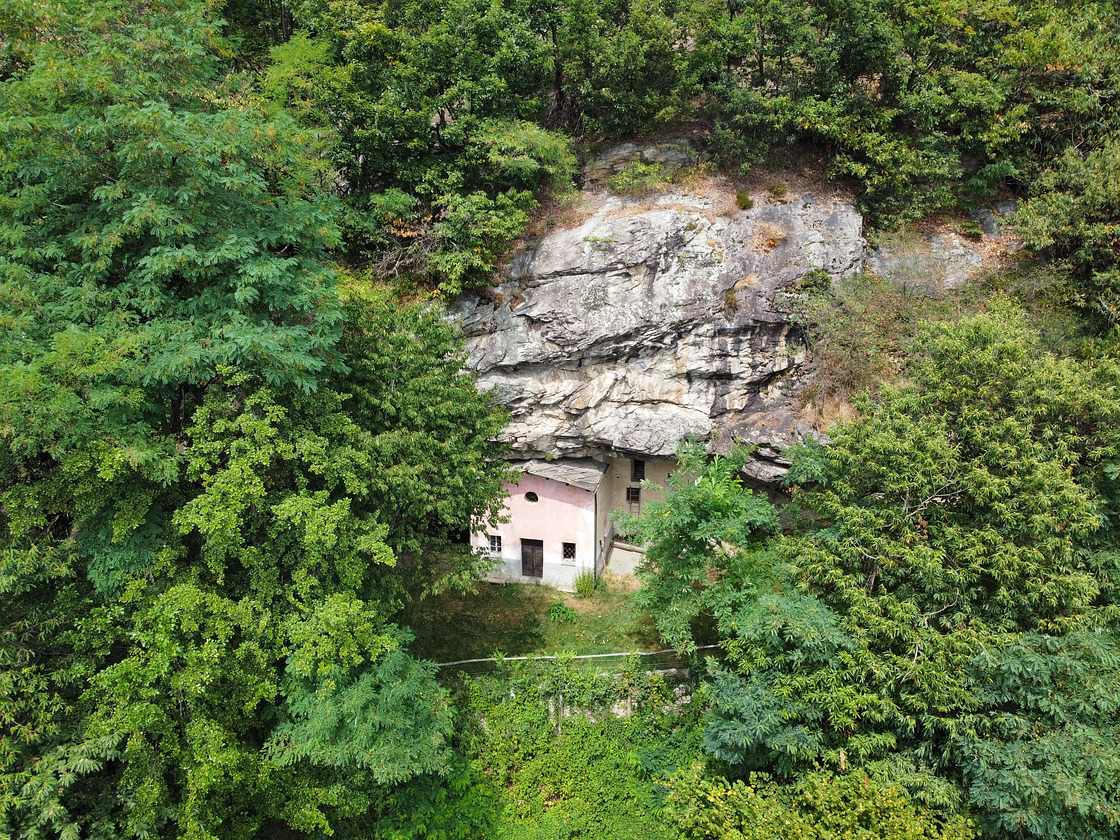
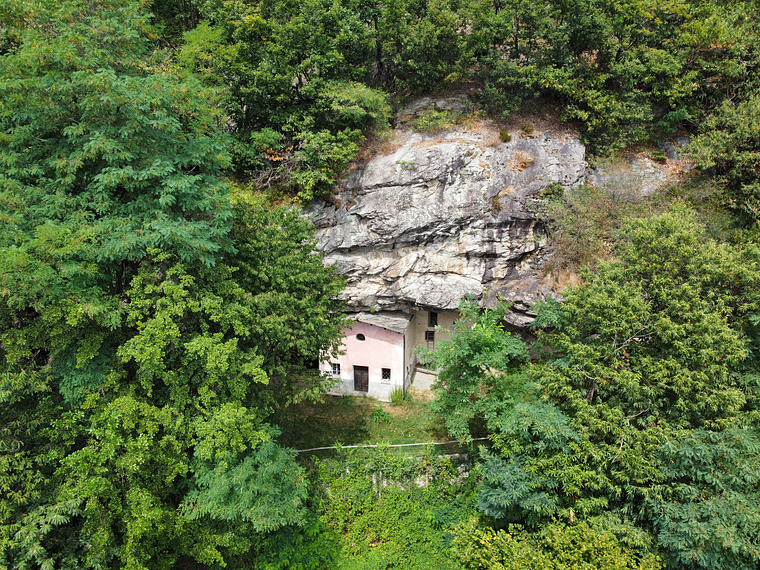
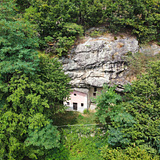
There are also other worthwhile climbing spots nearby. The San Sofia Crag is in a very convenient location along the dirt road leading to the other sectors. Placche di Max lies further down and to the left, on the trail to La Miaroca, a high-difficulty crag located to the far left of San Leonardo. Next to the San Leonardo chapel, some very steep routes have been equipped by M. Piras for dry-tooling, though they can also be climbed normally. In the same area, there is a charming bouldering zone with beautiful lines. Other notable cliffs include Sasso Regis, one of the most beautiful in the area with mid-to-hard grades, Belvedere, in a panoramic position with mostly mid-grade lines, and Campanile, to the right of Belvedere, shaded and featuring easy, medium, and project lines.
The routes in Revello offer great variety in holds and movement: from delicate slabs to steep overhangs, from crimps to pockets, with grades to suit every climber. This is an ideal summer crag with quality rock, easy access, and a wide range of sectors for beginners, enthusiasts, and experts alike. No real downsides – Revello is as complete as it gets.
🇮🇹
⛰️Revello, all’inizio della Valle Po, a un’altitudine di 450-500 metri. È un luogo che offre arrampicata quasi tutto l’anno grazie alla sua esposizione a est, sud-est e sud, e all’ottima posizione dei vari settori che garantiscono sempre almeno un’area all’ombra durante l’estate. Dalla base delle pareti, e ancora meglio arrampicando, si gode un panorama mozzafiato sulla bassa valle fino a Saluzzo.
L’ampia fascia rocciosa è divisa in diversi settori, che si susseguono lungo il sentiero di accesso, da destra verso sinistra. Il settore destro, diviso in due pareti di diverso orientamento, ospita circa 40 tiri su magnifica roccia. Poco più a sinistra troviamo Penna Bianca, caratterizzato da placche e strapiombi nella parte alta, con poche vie, due delle quali su più tiri. Più sopra, su una cengia, sta nascendo il nuovo piccolo settore Penne Nere, mentre Aquarius propone 27 vie che alternano placche e netti strapiombi.
Per chi cerca vie di difficoltà medio-bassa, il settore Panorama su Revello offre 20 tiri piacevoli, mentre Auditorium è più impegnativo, con 20 tiri spesso in strapiombo. El Quezero presenta 18 vie con caratteristiche varie, e Pilastro Rosso, con 16 tiri anche molto lunghi, è perfetto per chi cerca divertimento su difficoltà medio-alte. In generale, i gradi delle vie vanno dal 4a all’8°, con possibilità di incontrare tiri fino al 7c e oltre. Le soste sono dotate di catena e maillon o moschettone apribile, mentre i tiri necessitano dai 6 ai 15 rinvii, a seconda della lunghezza che varia dai 10 ai 35 metri.
Non mancano altre falesie interessanti nei dintorni. La falesia di S. Sofia è comodissima, sulla strada sterrata di accesso agli altri settori. La Zona Placche di Max si trova in basso e a sinistra, lungo il sentiero per la Miaroca, falesia di alta difficoltà posta alla sinistra di tutta San Leonardo. Accanto alla chiesetta di San Leonardo ci sono alcune vie molto strapiombanti attrezzate da M. Piras per il dry-tooling, ma scalabili anche normalmente; sempre lì si trova un’interessante area boulder con linee molto belle. Altre strutture degne di nota sono Sasso Regis, una delle più belle della zona con gradi medio-alti, Falesia del Belvedere, situata in posizione dominante con vie di difficoltà media, e Falesia del Campanile, a destra del Belvedere, in ombra e adatta a tiri facili, medi e progetti.
Le vie di Revello offrono una grande varietà di prese e movimenti: si passa dalla placca allo strapiombo, dalle tacche ai bidoiti, con gradi per tutti i gusti. La falesia è ideale per chi cerca arrampicata estiva su roccia di qualità, con accesso comodo e una gamma di settori adatti a tutti i livelli. Non ci sono difetti evidenti: è una falesia completa, con settori per principianti, appassionati e esperti.