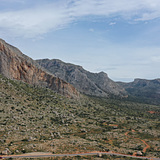
The upper sectors of Zobolo can be divided into three different walls, all accessed via the same dirt track. Be prepared and come with a suitable off-road car, E-Bikes or except the 45min hike.
1. Sector Chioni
This is the first sector you reach. It was equipped around 15 years ago, mainly by Torelli✝︎, Titopoulos, and others. Most routes already show a significant amount of rust and should be climbed with caution and entirely at your own risk. The majority of lines are in the lower and easy mid grades, following generally well chosen features. There are also four steep roof routes, but as with many other climbs here, it is advisable to wait until proper rebolting has been carried out using materials suitable for the intense salty sea winds of the cape.
2. Sectors Lykogremos (East and North)
Further along the track, you reach the two sectors of Lykogremos — one east-facing and one north-facing. The rock type is typical for shady seaside crags, often covered with a white, powdery lichen coating. In many cases, bolt placements add to the difficulty of the routes and could have been better positioned.
3. Sector Krioni
The third sector along the dirt road is Krioni, oriented to the southeast and featuring rock quality similar to Lykogremos but with many lines following crag features as well. Flakes and holds have been reinforced where necessary, the routes are generally well equipped, and most belay areas are places to relax between attempts and offer great views.
Overall, the area is characterized by strong winds and widespread rusting, even on some of the more recently equipped routes, suggesting that the impact of the harsh seaside conditions was underestimated during bolting. There is still room for improvement when it comes to adapting equipment to the environment.