English below!
🇩🇪 Der Thalhofergrat ist der letzte Ausläufer des Peilsteins. Wenn man nach der Spartawand des Peilsteins den Bergrücken folgt kommt ihr direkt zu den oberen Teilen des Kalkfelsens. Die ersten Sportkletterrouten wurden in den 80er eingerichtet, damals stand der Thalhofergrat noch im Schatten seines großen Bruders den Peilstein. Mittlerweile ist er vor allem für die Wiener Kletterscene ein essentielles Gebiet, sowohl für Anfänger als auch für die "Hard-Mover".
Nicht nur die Kletterschwierigkeiten sind breit gefächert sondern auch die Routenstile, von langen plattigen Touren an der Ostseite bis zu kurzen maximal-Kraft Touren an der Westseite beim Felsenfenster.
Da der Thalhofergrat sowohl eine Ost als auch eine Westseite besitzt kann man hier fast ganzjährig Klettern, in den heißen Sommermonaten bietet sich der Nordgrat auf der gegenüberliegenden Straßenseite an.
Auch der kurze Zustieg ist bei manch Sportkletterern sehr beliebt.
Südwestwand: Nicht nur wegen der Ausrichtung sondern auch wegen den extrem kurzen Zustiegs (1min) wird hier gerne eingeklettert. Hier findet man die längsten und gleichzeitig auch die ältesten Routen des Thalhofergrats. Der Klassiker von 1935 Annysteig ist 45m lang und ist in zwei Längen aufgeteilt. Ein weiterer Klassiker dieses Sektors ist die Maturavorbereitung 6a.
Untere Westwand: Diese Wand ist voll mit Thalhofer-Klassikern, von den drei Krankheiten (Cholera, Typhus und Malaria alle 6c+) welche lange ausdauernde Kletterei bieten, bis zu den 8a "must-have" Zen und Saxifraga. Der Westwind ermöglicht auch hier ein Klettern an warmen Tagen bis zur Mittagszeit.
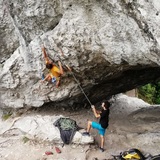
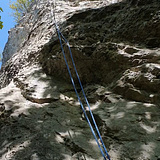
Obere Westwand: Wer hier über das Seilgeländer zu den oberen Routen aufsteigt ist auch an belebten Wochenenden meist alleine. In der Höhle braucht ihr, obwohl die Touren nicht lang sind Maximalkraft und eine gute Portion Ausdauer. Solltet ihr die Aiolos 8b/+ versuchen wollen, nehmt auch an warmen Tagen eine Jacke mit, durch das Felsenfenster weht stets der Wind.
Untere Thalhoferwand: Da hier die Routen sich im mittleren Bereich ansiedeln ist hier an schönen Tagen meist reges Treiben. Auch der Felsen zeigt schon deutliche Begehungsspuren, nichts desto trotz bleiben Touren wie Amerika 6c+ oder Falco live 6b+ fantastische Routen.
Zentrale und Oberer Thalhoferwand: Ähnlich wie die Untere Thahoferwand nicht die Routen ca. 15 Meter lang, hier lernt man auf seinen Füßen zu stehen um sich später an der Ostwand an den langen Platten zu beweisen.
Trinkratzahn, Philosophenzahn und Auenland: Diese drei etwas abgelegenen Sektoren sind sowohl von der Wandhöhe als auch von der Routenanzahl im unteren Bereich. Auch hier bist du meist alleine und sowohl Anfänger als auch Fortgeschrittene kommen hier auf ihre Kosten.
Thalhoferkanzel: Vom Parkplatz aus sichtbar ist auch hier meist all zu viel los, obwohl die Touren hier von ausdauernd bis diffizil vielfältig sind, leider können die Anfangsmeter etwas brüchig sein.
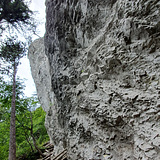
Untere Ostwand: Hier kann man wenn die ersten Sonnenstrahlen den Fels erhitzen das neue Kletterjahr starten lassen. Meist windgeschützt bietet die Ostseite lange Routen im besten plattigen Kalk. Der Himmelsfinger ist der exponierte Turm im unteren Bereich. Auch über den Felsenfenster welches eine Verbindung zur Westseite ist, bietet die Ostwand unglaublich schöne Kletterei. Meist wird hier die erste und zweite Seillänge zusammen geklettert.
Obere Ostwand: Hier türmt sich die Wand auf, aus den Platten des unteren Teils der Ostwand sind mächtige Überhänge geworden und da ist es nicht verwunderlich, dass Christoph Helma hier die bis heute schwerste Route (Hobby Extra 8c+) des Thalhofergrats eröffnet hat.
Klapf und Hansi bitte Saft: Der Klapf ist ein selten begangener Block direkt an der Straße, nicht nur der Straßenlärm lässt auch Anfänger fern bleiben. Der überhängende Felsen über den Bach bietet jedoch zwei interessante Kurzrouten.
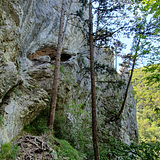
Nordgrat: Der Nordgrat des Thalhofergrats ist ideal im Sommer, da die Sonne hier nur abends die Wand trifft. Die vielen Bäume spenden auch dann noch Schatten. Nach Regenfällen bleiben die Routen länger feucht und dann fühlen sich nur die Gelsen wohl. Die Routen sind meist durch einzelne Schwierige Stellen aus, jedoch ist im oberen Teil auch exakte Fußtechnik gefordert.
___
🇬🇧 The Thalhofergrat is the last outcrop of the Peilstein. If you follow the ridge after the Spartawand of the Peilstein, you will come directly to the upper parts of the limestone cliff. The first sport climbing routes were established in the 1980s, at a time when the Thalhofergrat was still overshadowed by its big brother, the Peilstein. Nowadays, it has become an essential area for the Vienna climbing scene, catering to both beginners and "hard movers."
Varied Climbing Challenges
Not only are the climbing difficulties diverse, but the styles of routes range from long slab climbs on the east side to short, power-intensive routes on the west side at the Felsenfenster. Since the Thalhofergrat has both an east and west side, climbing is possible almost year-round. During the hot summer months, the north ridge on the opposite side of the road is a great option. Additionally, the short approach is very popular among many sport climbers.
South-West Wall
The southwest wall is popular not only because of its orientation but also due to the extremely short approach (1 minute). Here, you can find the longest and simultaneously the oldest routes of the Thalhofergrat. The classic route, Annysteig, established in 1935, is 45 meters long and divided into two pitches. Another classic in this sector is Maturavorbereitung 6a.
Lower West Wall
This wall is filled with Thalhofer classics, from the three diseases (Cholera, Typhus, and Malaria, all 6c+) which offer long endurance climbing, to the "must-have" 8a routes Zen and Saxifraga. The west wind also allows climbing on warm days until midday.
Upper West Wall
If you ascend over the rope railing to the upper routes, you are usually alone even on busy weekends. In the cave, although the routes are not long, you will need maximum strength and a good amount of endurance. If you plan to attempt Aiolos 8b/+, make sure to bring a jacket even on warm days, as there is always a breeze coming through the cave.
Lower Thalhofer Wall
Since the routes here are located in the mid-range difficulty, there is usually a lot of activity on nice days. The rock shows clear signs of wear, yet routes like Amerika 6c+ or Falco live 6b+ remain fantastic climbs.
Central and Upper Thalhofer Wall
Similar to the lower Thalhofer wall, the routes here are about 15 meters long. This area teaches you to stand on your feet to later prove yourself on the long slabs of the east wall.
Trinkratzahn, Philosophenzahn, and Auenland
These three somewhat remote sectors have shorter wall heights and fewer routes. Here, you will usually be alone, and both beginners and advanced climbers will find enjoyment.
Thalhoferkanzel
Visible from the parking lot, the Thalhoferkanzel is usually quite busy, although the routes here vary from endurance to technical. Unfortunately, the initial meters can be somewhat loose.
Lower East Wall
Here, you can kick off the new climbing year as soon as the first rays of sun warm the rock. The east side, usually sheltered from the wind, offers long routes on the best slabby limestone. The Himmelsfinger is the prominent tower in the lower section. The east wall also offers incredibly beautiful climbing over the Felsenfenster, which connects to the west side. Usually, the first and second pitches are climbed together.
Upper East Wall
Here, the wall rises up; the slabs of the lower part of the east wall have become powerful overhangs. It is not surprising that Christoph Helma established the hardest route of the Thalhofergrat here to date (Hobby Extra 8c+).
Klapf and Hansi Please Juice
The Klapf is a rarely climbed block right by the road, where not only the road noise keeps beginners away. However, the overhanging rock above the stream offers two interesting short routes.
North Ridge
The north ridge of the Thalhofergrat is ideal in summer, as the sun only reaches the wall in the evening. The many trees also provide shade even then. After rainfall, the routes remain wet longer, and only the mosquitoes enjoy themselves. The routes usually consist of individual difficult sections, but the upper part also requires precise footwork.