🚶♂️ 16-18' - ⛰️ 430-445 MSL - 🧭 S
☀️ All day / Tutto il giorno
🇬🇧/🇺🇸
Fonzaso is one of the most historic and renowned climbing crags in the Feltre area, a true landmark for generations of climbers. With over 100 established routes and ongoing development driven by a passionate local community, Fonzaso continues to evolve while preserving its unmistakable old-school character.
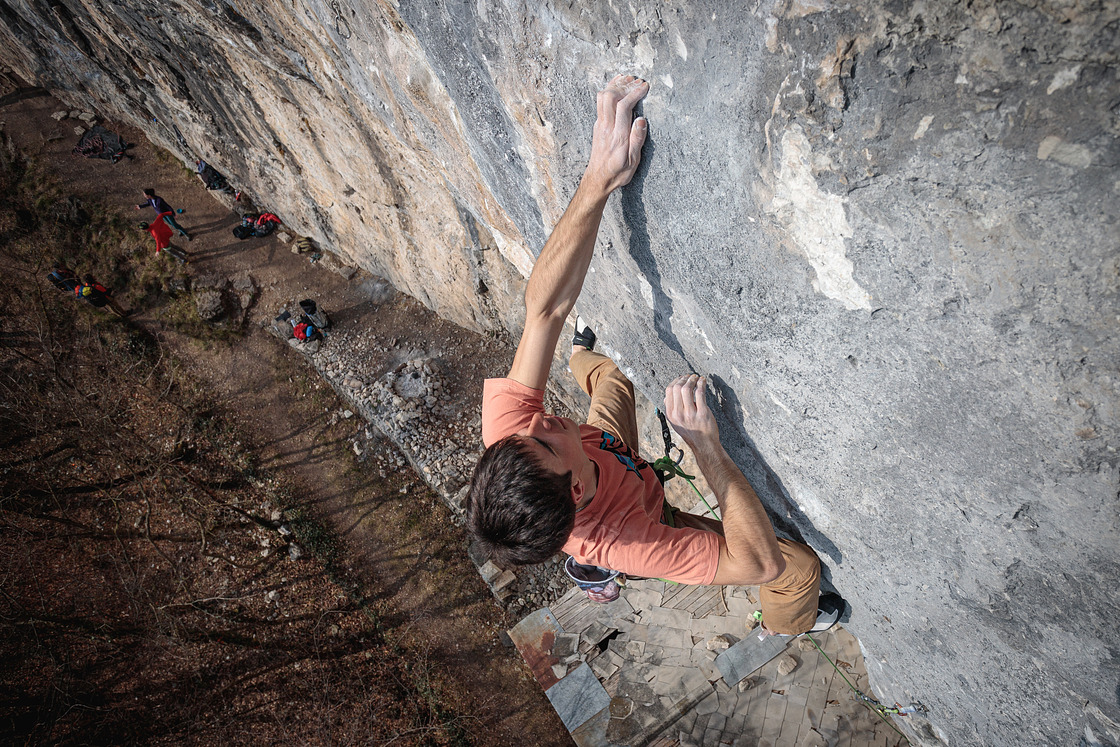
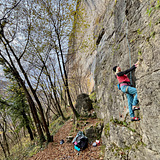
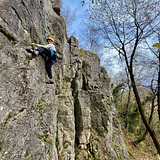
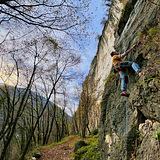
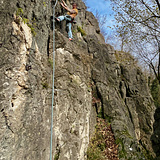
Climbing here is predominantly technical and endurance-based, on excellent grey-white limestone featuring edges and pockets. Like all timeless “training crags,” Fonzaso is a perfect place to refine technique, build resistance, and push personal limits. The range is impressive: from easy beginner-friendly lines to steep testpieces up to 9a.
The crag is divided into several sectors:
• Casetta
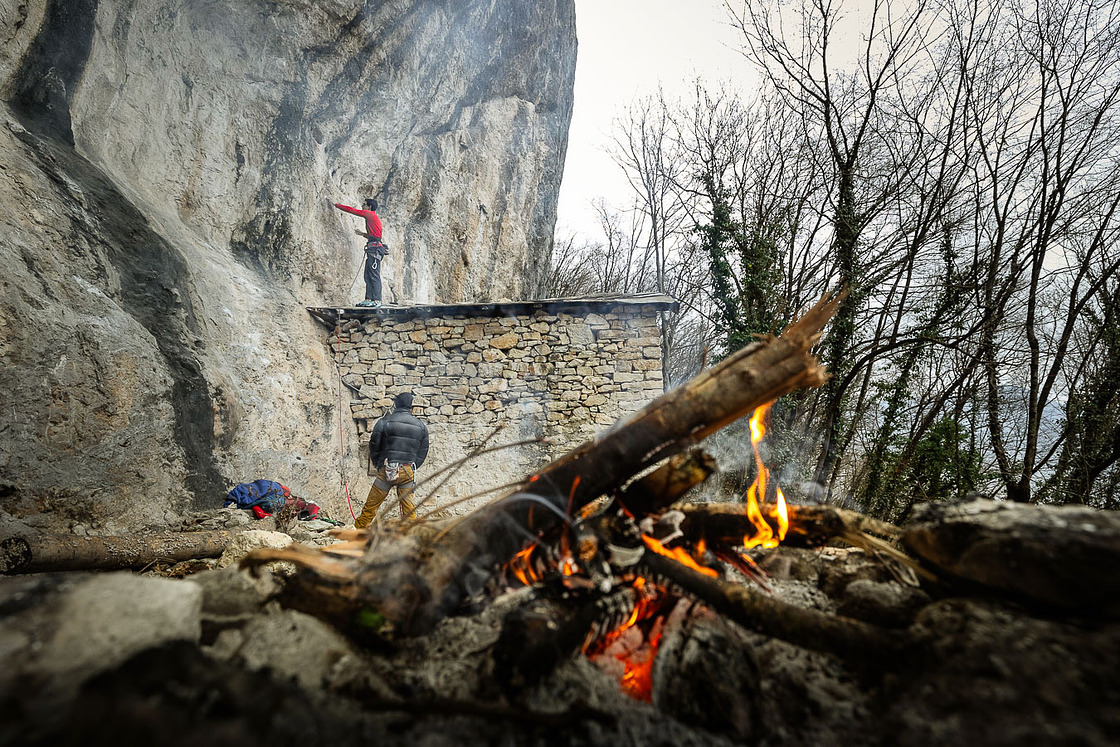
This is the hard core of Fonzaso, where the history of high-grade climbing in the Feltre area was written. Iconic routes such as “Drumtime” and “Diabloluna” made this sector famous.
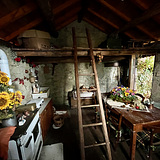
There are nearly 60 routes, from 6a up to the 9a of “Black Lotus.” Easier climbs follow long, vertical, stamina-testing walls, while the hardest routes are found on the steep overhang that shelters the small hut giving the sector its name.
• Placche Basse
A small slab sector that originally hosted only two routes. Today it offers 8 slab climbs, ranging from 6a to 7b, technical and delicate.
• Placche Alte
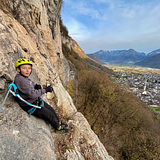
A beautiful and extensive sector with 43 routes, featuring more moderate difficulties than Casetta. Grades range from 3 to 6c, making it an excellent choice for beginners and intermediate climbers. The right-hand side is the most recent and hosts the easiest lines.
Be aware that on some older routes the bolts may be more spaced.
Above this sector runs an easy horizontal via ferrata, which crosses the entire wall. It can be used to reach the anchors of almost all routes, making it possible to set top ropes easily and safely, an excellent way to push limits without the fear of leaving gear behind.
Bolting is generally excellent, thanks to continuous rebolting efforts by the local climbing community. On the more historic lines, original bolt spacing has been preserved, so expect some air beneath your feet. Newer and easier routes are more closely bolted.
Fonzaso is a winter crag. Summer climbing is not recommended. Winter approaches can be intimidating when the valley is covered in fog, but as you gain elevation along the trail you often emerge into sunshine above the clouds, a magical experience.
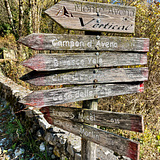
The bases of all sectors are comfortable. While the approach is not particularly short, it is straightforward and pleasant.
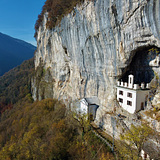
A visit to the Hermitage of San Micel is highly recommended, easily reachable from the main path or via the educational via ferrata starting next to the first route of the “Placche Alte” sector.
For those who want to walk a bit further, a well-marked trail leads to the “Casa delle Fate” (“Fairy House”), a curious and uniquely decorated dwelling well worth the detour.
🇮🇹
Fonzaso è una delle falesie più storiche e rinomate del Feltrino, un vero punto di riferimento per intere generazioni di scalatori. Con oltre 100 vie tracciate e un continuo sviluppo alimentato da una comunità locale appassionata, Fonzaso continua a evolversi mantenendo intatto il suo inconfondibile carattere old-school.
L'arrampicata è prevalentemente tecnica e di resistenza, su un eccellente calcare grigio-bianco caratterizzato da tacche e buchi. Come tutte le intramontabili "falesie old-school", Fonzaso è il luogo ideale per affinare la tecnica, costruire la resistenza e superare i propri limiti. La varietà dei gradi è notevole: dalle linee facili per principianti ai tiri strapiombanti più impegnativi fino al 9a.
La falesia è divisa in diversi settori.
• Casetta
Rappresenta il cuore di Fonzaso, dove è stata scritta la storia delle alte difficoltà nel Feltrino. Vie iconiche come “Drumtime” e “Diabloluna” hanno reso celebre questo settore, che conta quasi 60 itinerari dal 6a fino al 9a di "Black Lotus". Le vie più facili seguono lunghi muri verticali di continuità, mentre quelle più difficili si trovano sullo strapiombo pronunciato che protegge la piccola casetta da cui il settore prende il nome.
• Placche Basse
Sono un piccolo settore di placca che originariamente ospitava solo due vie. Oggi offre 8 itinerari tra il 6a e il 7b, caratterizzati da una scalata tecnica e delicata.
• Placche Alte
Sono un settore splendido e vasto di 43 vie, con difficoltà più contenute rispetto alla Casetta. I gradi vanno dal 3 al 6c, rendendolo un'ottima scelta per arrampicatori principianti e intermedi; la parte destra è la più recente e ospita le linee più facili. Va tenuto presente che su alcune vie più vecchie la chiodatura può risultare più distanziata. Sopra questo settore corre una facile via ferrata orizzontale che attraversa l'intera parete: può essere utilizzata per raggiungere le soste di quasi tutte le vie, permettendo di montare la corda dall'alto in modo facile e sicuro per spingersi al limite senza timore di dover abbandonare l'attrezzatura.
La chiodatura è generalmente ottima grazie ai costanti sforzi di riattrezzatura della comunità locale. Sulle linee più storiche è stata mantenuta la spaziatura originale dei fix, quindi è normale aspettarsi un po' di "aria" sotto i piedi, mentre le vie più nuove e facili sono chiodate più vicine.
Fonzaso è essenzialmente una falesia invernale e l'arrampicata estiva è sconsigliata. L'avvicinamento invernale può intimidire quando la valle è coperta dalla nebbia, ma guadagnando quota lungo il sentiero si emerge spesso al sole sopra le nuvole, un'esperienza magica.
La base di tutti i settori è comoda e, sebbene l'avvicinamento non sia brevissimo, risulta semplice e piacevole.
Una visita all'Eremo di San Micel è caldamente consigliata, raggiungibile facilmente dal sentiero principale o tramite la via ferrata didattica che parte accanto alla prima via delle Placche Alte. Per chi volesse camminare un po' di più, un sentiero ben segnalato conduce alla "Casa delle Fate", una dimora curiosa e decorata in modo unico che merita sicuramente una deviazione.
🇬🇧/🇺🇸
Fonzaso entered the world of climbing as early as the second half of the 1960s, when climbers from the Feltre area began to frequent them with an exploratory spirit. However, it was only from the mid-1980s that the sector which is now the most representative for the crag began to take shape: “Casetta”. Here the energy and vision of a group of climbers came together, who would decisively shape the history of the crag: Walter Bellotto, Thomas Zadra, Marino Giacomel, Moreno Facen, Giuliano Defredo, Oldino De Paoli, Felice Maccagnan, Yuri Gadenz, Maurizio Zanolla “Manolo”, along with other key figures of those years.
This was the period when sport climbing was changing its face: handmade and unreliable anchors were gradually abandoned in favor of more modern and safer equipment. The first lines established at the Casetta followed the more slabby sections of the wall, with slab routes around 6a/b, ideal for starting to get to know the rock.
Before long, attention shifted to the steeper walls, where “Profondo Rosso” was born, becoming the symbolic route of difficulty of that era. The first free ascent was made by Enrico Bettega, who graded it 7b+, making it for many years one of the most feared routes at the crag.
In the early 1990s Maurizio “Icio” Dall’Omo entered the scene, bolting and freeing new routes, contributing significantly to keeping the development of the sector alive.
As the year 2000 approached, the crag experienced another leap in quality thanks to Alessandro Sorato “Coco”, who bolted a direct and spectacular line in the most overhanging part of the wall: “Diabloluna” was born. After equipping it, Sorato also made the first ascent, giving Fonzaso its first 8c, soon repeated by Riccardo Scarian.
In the new millennium it was Scarian himself who took up the legacy of the most ambitious projects. He took over and rebolted an old line by Sorato, “Belfagor”, and then succeeded in making the first ascent. From that moment on, his gaze turned more and more insistently to the great wall, sensing still-unexplored potential. Thus “Il Gladiatore” and “Drumtime” were born, both climbed by Scarian. Unfortunately, the latter no longer preserves its original characteristics today: a variant with new chipped holds altered its difficulty, in an episode that represents a wound to the ethics of climbing. Among the few repeats, only Alessandro Zeni managed to climb “Drumtime” in its original version.
In 2012 Scarian bolted another demanding line, “Child in Time”, which was climbed the following year, completing a sequence of routes of high technical and aesthetic level.
In 2018 it was again Alessandro Zeni who left his mark with the first ascent of “Black Lotus”, probably the last line still possible in the Casetta sector and today considered the hardest route at the crag.
At the same time, a new generation of climbers from the Feltre area continues to explore the left side of the wall, opening and bolting new sectors. The future of Fonzaso therefore remains in constant evolution, with the prospect of an area destined to expand and to offer new climbing opportunities.
🇮🇹
Le pareti di Fonzaso entrano nel mondo dell’alpinismo già nella seconda metà degli anni Sessanta, quando gli alpinisti feltrini iniziano a frequentarle con spirito esplorativo. Tuttavia, è solo dalla metà degli anni Ottanta che prende forma il settore oggi più rappresentativo della falesia: “Casetta”. Qui si concentra l’energia e la visione di un gruppo di arrampicatori che segneranno in modo decisivo la storia della falesia: Walter Bellotto, Thomas Zadra, Marino Giacomel, Moreno Facen, Giuliano Defredo, Oldino De Paoli, Felice Maccagnan, Yuri Gadenz, Maurizio Zanolla “Manolo”, insieme ad altri protagonisti di quegli anni.
È il periodo in cui l’arrampicata sportiva cambia volto: si abbandonano progressivamente gli ancoraggi artigianali e poco affidabili per adottare attrezzature più moderne e sicure. Le prime linee tracciate alla Casetta seguono le parti più appoggiate della parete, con vie di placca attorno al 6a/b, ideali per iniziare a conoscere la roccia.
Ben presto però l’attenzione si sposta verso i muri più verticali, dove nasce “Profondo Rosso”, che diventa la via simbolo della difficoltà del periodo. La prima libera è firmata da Enrico Bettega, che la valuta 7b+, rendendola per anni una delle più temute della falesia.
All’inizio degli anni Novanta entra in scena Maurizio “Icio” Dall’Omo, che chioda e libera nuove vie, contribuendo in modo significativo a mantenere vivo lo sviluppo del settore.
Con l’avvicinarsi del Duemila, la falesia conosce un nuovo salto di qualità grazie ad Alessandro Sorato “Coco”, che attrezza una linea diretta e spettacolare nella parte più strapiombante della parete: nasce “Diabloluna”. Dopo averla chiodata, Sorato ne realizza anche la prima salita, regalando a Fonzaso il suo primo 8c, ripetuto poco dopo da Riccardo Scarian.
Nel nuovo millennio è proprio Scarian a raccogliere l’eredità dei progetti più ambiziosi. Riprende e richioda un vecchio tracciato di Sorato, “Belfagor”, portandolo poi alla prima salita. Da quel momento lo sguardo si posa sempre più insistentemente sul grande muro, intuendone possibilità ancora inesplorate. Nascono così “Il Gladiatore” e “Drumtime”, entrambe salite da Scarian. Purtroppo, quest’ultima non conserva più oggi le caratteristiche originali: una variante con nuovi appigli ne ha alterato la difficoltà, in un episodio che rappresenta una ferita per l’etica della scalata. Tra le poche ripetizioni, solo Alessandro Zeni riuscirà a salire “Drumtime” nella versione originaria.
Nel 2012 Scarian chioda un’ulteriore linea impegnativa, “Child in Time”, che verrà salita l’anno successivo, completando una sequenza di vie di alto livello tecnico ed estetico.
Nel 2018 è ancora Alessandro Zeni a lasciare il segno con la prima salita di “Black Lotus”, probabilmente l’ultima linea ancora tracciabile nel settore della Casetta e oggi considerata la via più difficile della falesia.
Parallelamente, una nuova generazione di arrampicatori del Feltrino continua a esplorare la parte sinistra della parete, aprendo e chiodando nuovi settori. Il futuro di Fonzaso resta quindi in continua evoluzione, con la prospettiva di un’area destinata ad ampliarsi e a offrire nuove possibilità di arrampicata.