Description

☀️SUN DURING THE DAY:
From mid morning to mid afternoon

🧭 EXPOSURE: S/SW

🧱ROCK TYPE:
Compact limestone with sharp edges and a few tufas

📆 BEST PERIOD:
Due to the south exposure the best period is winter during sunny days, or during spring and autumn

👪 FAMILY FRIENDLY:
NO

📱PHONE SIGNAL:
NO (with exceptions)

🇬🇧
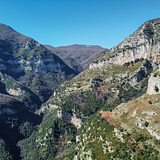
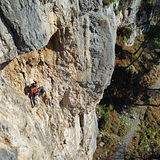
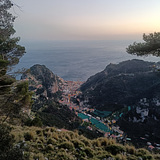
⛰️The Punta d’Aglio crag, located in the town of Scala, is one of the jewels of sport climbing in Campania and along the entire Amalfi Coast. Nestled in a stunning natural setting, it overlooks one of the most scenic stretches of the Mediterranean, offering breathtaking views from the Amalfi coastline to the Lattari Mountains.
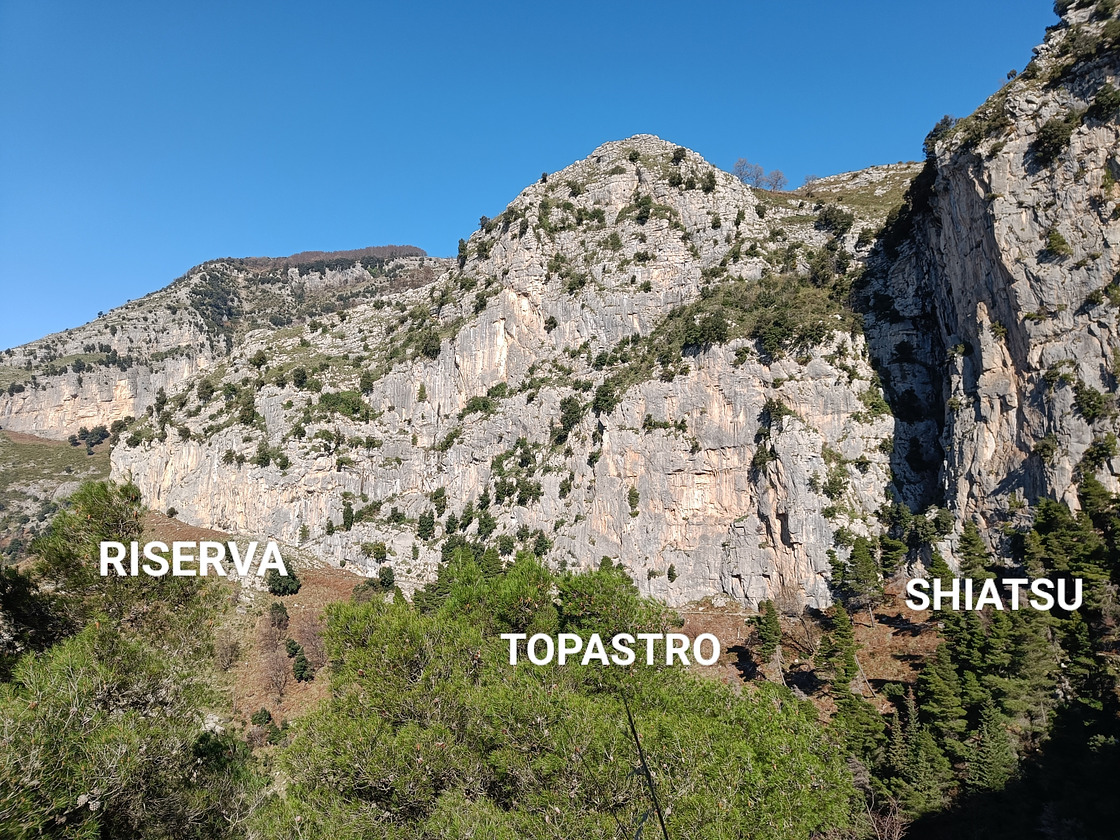
The surrounding landscape features traditional stone terraces, Mediterranean vegetation, and sweeping views over the Gulf of Salerno. The crag lies in an active grazing area and borders the Valle delle Ferriere Nature Reserve, a protected area rich in biodiversity, waterfalls, and hiking trails. Climbers are expected to respect the environment and park regulations, especially in the “Riserva” sector, where climbing is strictly prohibited.
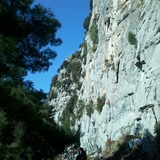
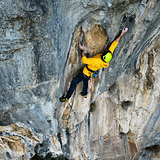
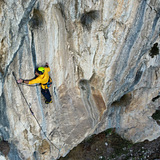
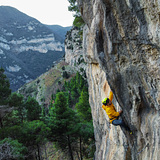
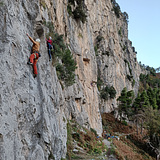
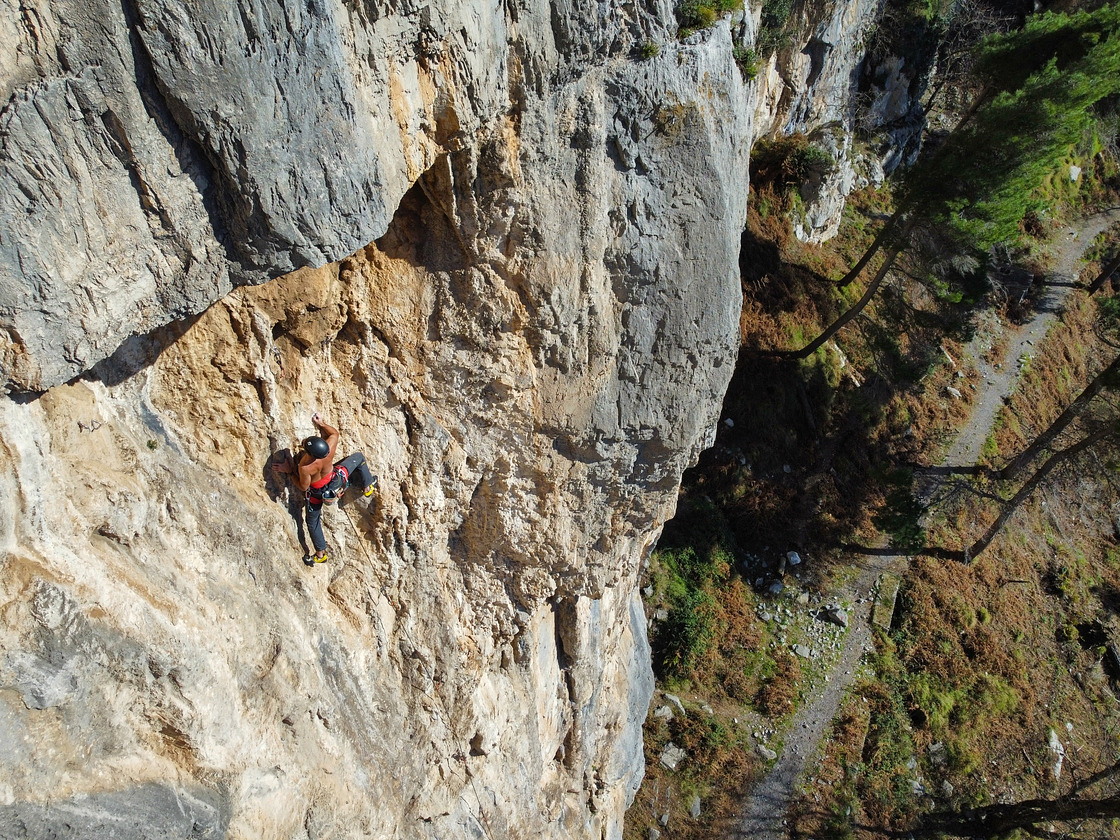
The rock is compact limestone, solid and occasionally sharp, typical of southern Italian crags. Climbing is mostly technical and vertical, requiring balance, precision, and good route-reading skills. There are also more physical sections with overhangs and bouldery moves on sharp holds.
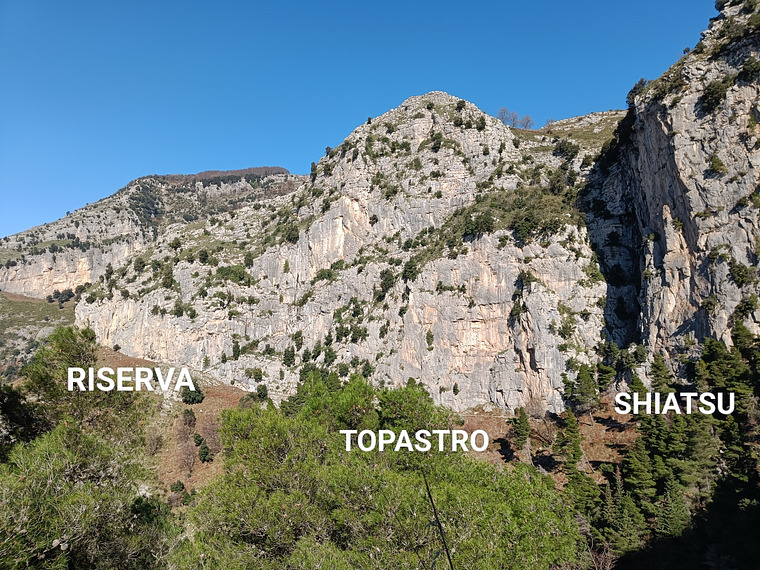
The crag is divided into three different walls — “Shiatsu”, “Topastro”, and “Riserva” — and offers over 80 sport routes ranging in length from 15 to 30 meters. Grades vary from 5b to 8a, making it suitable for a wide range of climbers, from beginners to advanced.
Its South/Southwest exposure makes Punta d’Aglio especially pleasant in spring, autumn, and winter, thanks to its mild climate and excellent morning sun.
The zone in exposed to rock falling, so be careful, especially after big rainfalls or ice during the night, and in case on strong wind.
There are some multipich routes that are not available due to the condition of the equipment.

🇮🇹
⛰️La falesia di Punta d’Aglio, situata nel comune di Scala, rappresenta uno dei gioielli dell’arrampicata sportiva in Campania e nell’intera Costiera Amalfitana. Immersa in un contesto naturalistico di straordinaria bellezza, si affaccia su uno dei tratti più suggestivi del Mediterraneo, regalando panorami spettacolari che spaziano dal mare di Amalfi ai monti Lattari.
Il paesaggio circostante è caratterizzato da terrazzamenti in pietra a secco, vegetazione mediterranea e ampie vedute sul Golfo di Salerno. La parete si trova in una zona di pascolo attivo e confina con il Parco Naturale della Valle delle Ferriere, un’area protetta ricca di biodiversità, cascate e sentieri escursionistici. Questo contesto impone un comportamento rispettoso dell’ambiente e delle regole del parco, in particolare nel settore “Riserva”, dove l’arrampicata è vietata.
La roccia è un calcare compatto, solido e talvolta tagliente, tipico delle falesie del sud Italia. L’arrampicata è prevalentemente tecnica e verticale, con vie che richiedono equilibrio, precisione e capacità di lettura. Non mancano sezioni più fisiche con strapiombi e passaggi boulderosi su prese nette.
Il settore è suddiviso in tre diverse pareti — “Shiatsu”, “Topastro” e “Riserva” — e conta oltre 80 vie sportive, di lunghezza variabile tra i 15 e i 30 metri. Le difficoltà spaziano dal 5b all’8a, rendendo la falesia adatta a un’ampia gamma di arrampicatori, dai principianti agli esperti.
L’esposizione a Sud/Sud-Ovest rende Punta d’Aglio particolarmente indicata per le mezze stagioni e l’inverno, grazie al clima mite e all’ottimo soleggiamento nelle ore mattutine.
La zona è esposta alla caduta di massi, perciò prestare attenzione soprattutto inj caso di vento e dopo forti piogge o gelate notturne.
History

🇬🇧
The climbing potential of the crag was discovered by Oreste Bottiglieri, who bolted the first route, "Coca Cola", in the late 1990s together with his friend Daniele. Later on, thanks to funding from the local mountain community, the main bolting work was carried out by Oreste and Stefano Sgobba.
During Years, bolting and climbing have been prohibited in Riserva sector, for reasons related to the conservation of nature.
The sector will need to be rebolted soon, therefore it's recommended to check the conditions of the equipment on the rock before climbing.

🇮🇹
Il potenziale arrampicatorio della falesia è stato scoperto da Oreste Bottiglieri, che alla fine degli anni ’90 ha chiodato, insieme all’amico Daniele, la prima via: "Coca Cola". Successivamente, grazie a un finanziamento della comunità montana locale, sono iniziati i veri lavori di chiodatura a cura di Oreste e Stefano Sgobba.
Negli anni è stato proibita la chiodatura e l'arrampicata nel settore Riserva, per motivi di conservazione della natura.
Il settore è prossimo alla necessità di essere richiodato, è quindi consigliato di verificare che le attrezzature siano in buono stato prima di intraprendere la scalata.

Punta d´Aglio

Climbing has been limited!

🅿️ PARKING: click the 🅿️ on the map to be redirected to your browser.

⏳ APPROACH TIME: 15-20 min by foot from the main road parking

🇬🇧
Regardless of your direction of arrival, the fastest route is the one that passes through Valico di Chiunzi.
Reach the Angri Sud motorway exit and continue toward Valico di Chiunzi, passing through the town of Corbara. After crossing the pass, keep right at all roundabouts, following signs for Ravello. Once in Ravello, take the tunnel on the right at the roundabout, then turn right again toward the hamlet of Scala.
In Scala, follow the signs for Punta D’Aglio, going up the hairpin bends. From the entrance to the village, the parking area can be reached by turning in either direction.
Park along Via Annunziata, using the paid street parking. Due to the high volume of tourism on the Amalfi Coast, parking can be expensive—up to €15 per day from May to October.
After parking, take the stairway on Via Acquacciola and continue on the trail of Via Punta D’Aglio. Midway along the path, there is a fountain with drinking water.
The crag is located in a grazing area, so caution is advised if bringing dogs, to avoid disturbing goats and causing unpleasant incidents with local shepherds.
Additionally, the climbing sector borders the Valle delle Ferriere Nature Reserve, and any entry into the park must comply with posted regulations. Climbing is strictly prohibited in the “Riserva” sector, which lies within the protected area.

🇮🇹
Indipendentemente dalla direzione di provenienza, il percorso più veloce è quello che attraversa il Valico di Chiunzi.
Raggiungere il casello autostradale di Angri Sud e proseguire verso il Valico di Chiunzi, attraversando il paese di Corbara. Dopo il valico, alle rotonde successive, mantenere sempre la destra in direzione Ravello. Una volta arrivati a Ravello, imboccare il tunnel sulla destra in corrispondenza della rotatoria, quindi svoltare a destra seguendo le indicazioni per la frazione di Scala.
Nel paese di Scala, seguire le indicazioni per Punta D’Aglio risalendo i tornanti. All’ingresso del paese è possibile raggiungere il parcheggio svoltando in entrambe le direzioni.
Parcheggiare in Via Annunziata, utilizzando i parcheggi a pagamento lungo la strada. A causa del forte afflusso turistico in Costiera Amalfitana, il costo del parcheggio può essere elevato, arrivando fino a 15 euro al giorno nei mesi da maggio a ottobre.
Una volta parcheggiato, imboccare la scalinata di Via Acquacciola e proseguire lungo il sentiero di Via Punta D’Aglio. A metà del percorso si trova una fontana con acqua potabile.
La falesia si trova in una zona di pascolo: è quindi necessario fare attenzione se si portano cani, per evitare di spaventare le capre e causare spiacevoli situazioni con i pastori locali.
Inoltre, il settore confina con il Parco Naturale della Valle delle Ferriere: se si entra nell’area protetta, è obbligatorio rispettare le regole indicate. L’arrampicata è severamente vietata nel settore Riserva, situato all’interno del parco.