🛣️ 🚗 🚧 The road is closed for the winter!
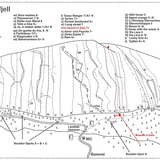
This is an overview drone-topo, to find parking, trails, route locations and to plan and tick your adventures. The routes that the authors of this guide has climbed is drawn in topo and route/pitch description is added. You can use these descriptions to climb the routes, but we recommend supplementing them with other, more detailed guidebooks for a more accurate description of routes and topos. This is intended as a source of inspiration, not as a complete climbing guide. We recommend the guidebook "Hægefjell Nissedal" from Gryttr Forlag (ISBN 978-82-691287-3-4), which contains detailed descriptions of the 16 most popular routes on the mountain. If you have climbed a route that is not well described in this guide, please contact us with supplementing information so we can draw it in the topo and make a better description.
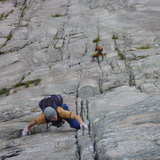
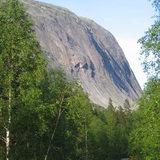
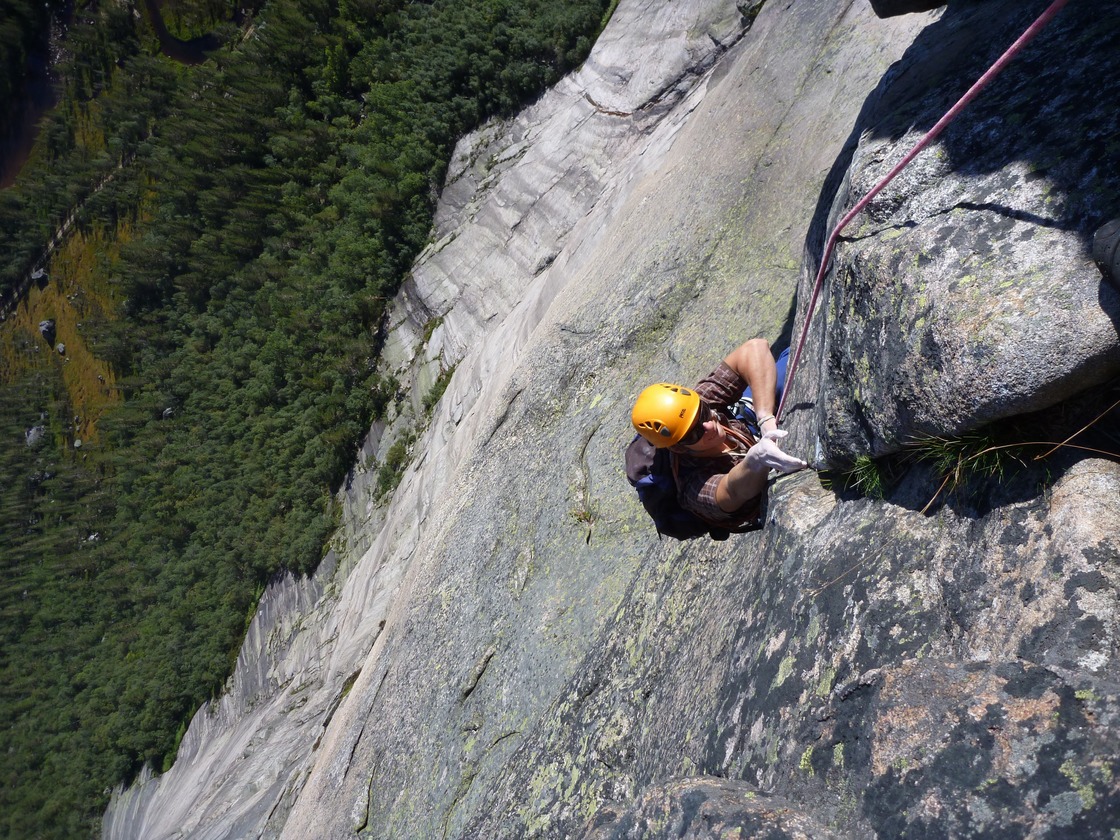
Hægefjell today stands as a mountain for all who love climbing clean, solid granite over multiple pitches. Located inland in Southern Norway's Nissedal municipality, it sits fairly centrally placed. The wall sees many visitors from across Norway, Sweden, Germany, and Denmark. Outside of Lofoten, few mountains in Norway attract as many traveling climbers. Mobile reception beneath the wall is almost nonexistent, making evening conversations around the campfire even more lively. Watching the sunset bathe the face of Hægefjell in golden light is a fitting reward for sore toes and aching Achilles tendons.
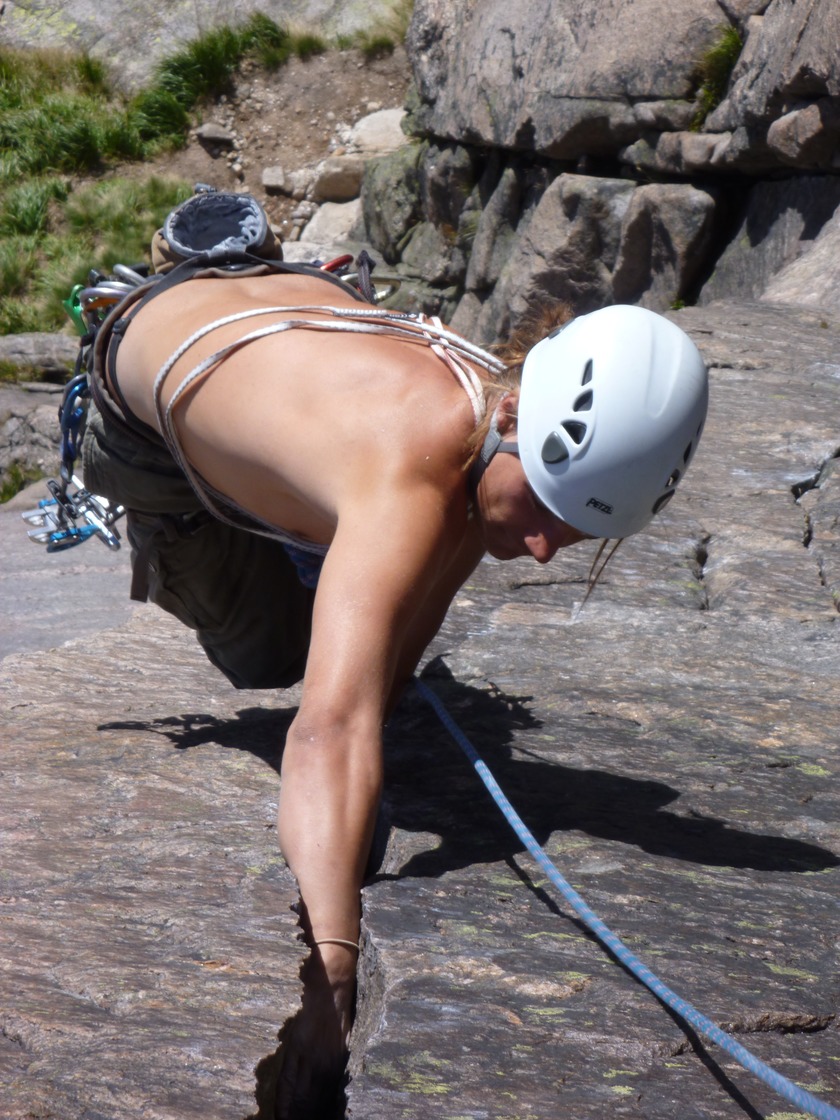
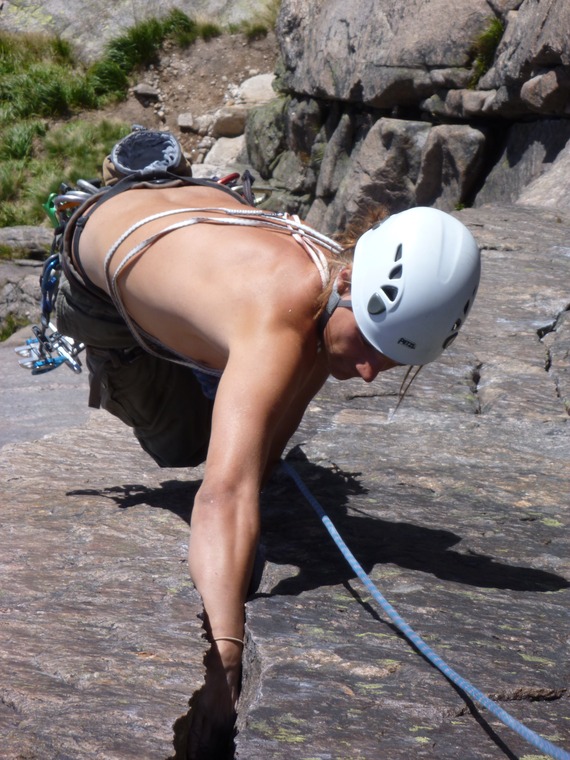
The mountain offers routes from 7b to 4+, with lengths ranging between 200 and 550 meters. Hægefjell is naturally divided into three sectors: a steep left-hand side, a central section, and a right-hand side with more moderate grades. Most routes are partially bolted, but four great classics take you from bottom to top entirely on trad gear: Via Lara (the most climbed), Sternschnuppe, Mot Sola, and Hegar. The rock quality is excellent and solid throughout.
If you're looking to experience one of Norway's finest and most accessible multi-pitch trad routes, this is the place. And if you're ready to take a step further and challenge yourself, you'll find inspiring routes at every grade.
The safest and best descent is to walk north along the summit ridge back down to camp — a beautiful hike taking about an hour at an easy pace. We strongly recommend walking down rather than rappelling; it is much safer and part of the Hægefjell experience.