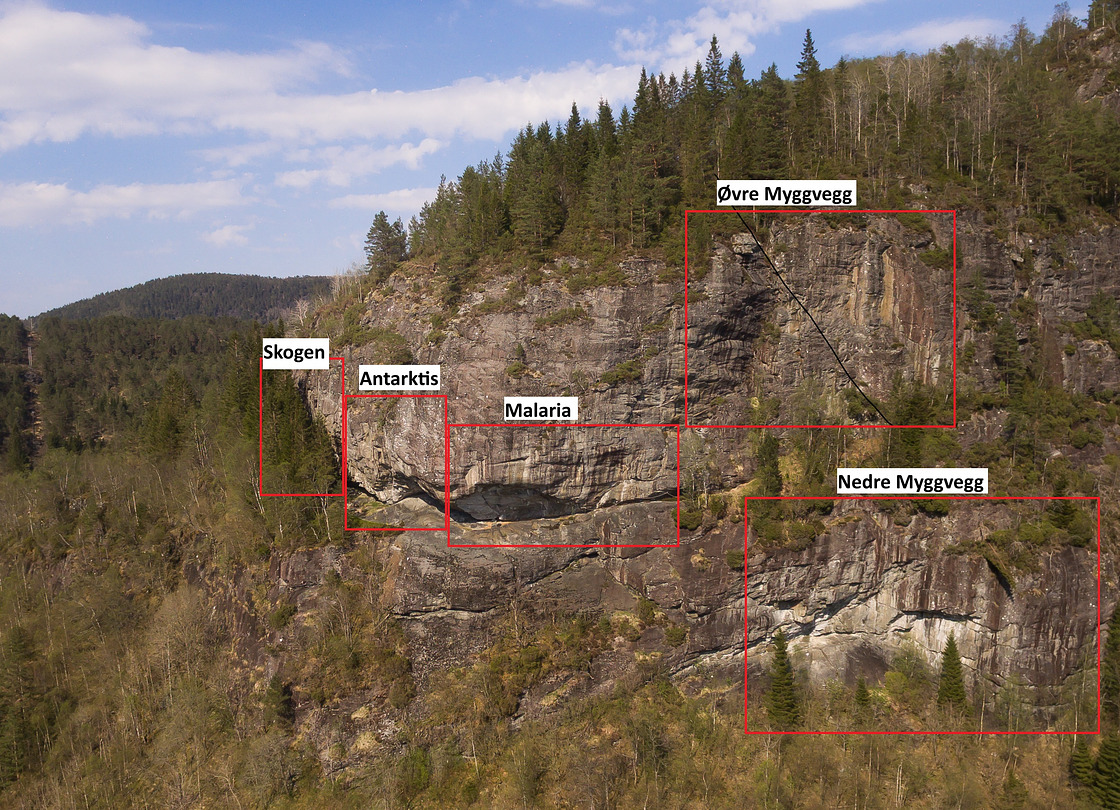
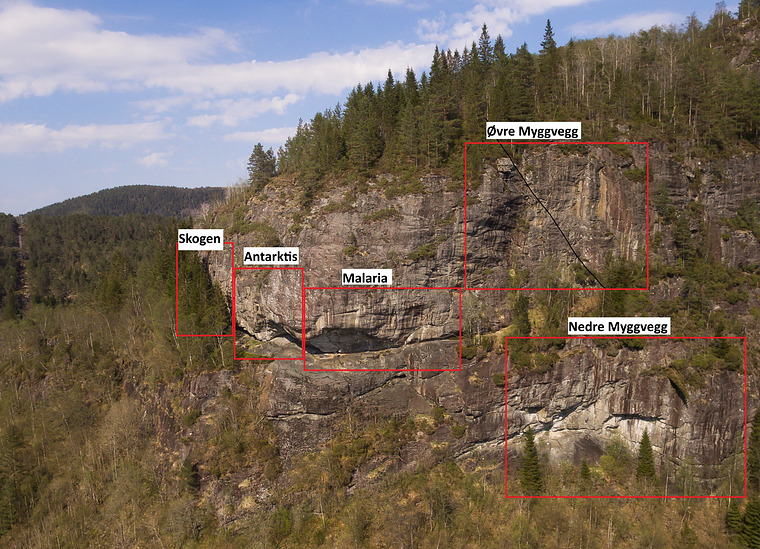
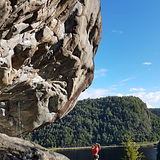
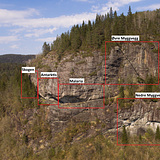
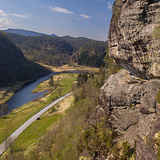
Myggveggen (The Mosquito Wall) is one of the best crags in Norway, but it`s location far from any active climbing community means it sees far less traffic then it deserves. The wall lies beautifully above Fossvatnet in Leirvik in Sogn og Fjordane in the outer most part of the Sognefjord. The steep overhang, known as "the Lion’s Gap" by locals, is easy to see from the road below.
The base of the wall is flat and pleasant on the left side, while in the area around the “Lion’s Gap” it drops off about 30 meters not far from the base of the climbs, meaning it’s not recommended to bring small children when climbing here. The same goes for the upper wall as it requires crossing a narrow ledge as well as climbing up some old fixed ropes to access.
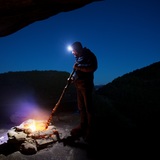
There are two old fire pits below the wall. Camping right below the wall is quite nice, especially in the spring, but as the name suggests, there can be quite a lot of annoying insects on windless days, especially during the summer, making this less then ideal. Camping is fortunatly possible in many other places. Leirvik café and motel is only a 2-minute drive from the crag and Birkeland camping is also just a 5-minute drive from the wall. In Leirvik there is a grocery store, and drinking water is free from the tap at the café.
Climbing
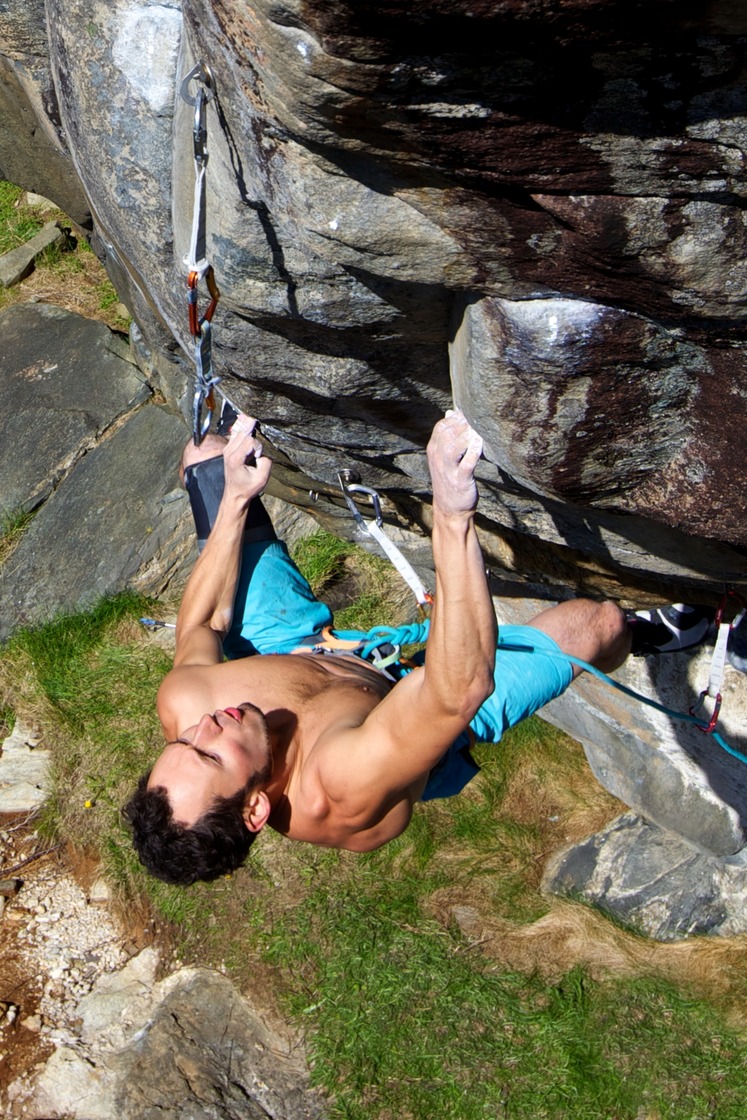
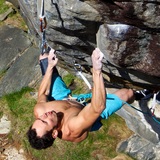
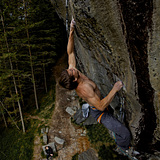
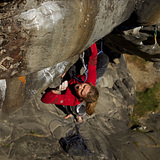
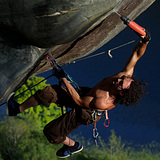
The climbing at the Mosquito Wall is varied. Most of the wall is slightly overhanging, while the routes in the cave are very steep. The height of the wall is between 15–20 meters. The rock quality is extremely good, even by Norwegian standards, and the holds are often rounded and sloping. The wall consists of bullet proof mica-rich gneiss with a wide variety of formations, with the exception of the sandy and extremly featured section around Tryllekunst.
Conditions
The best time to climb here is in the spring months of April, May, and June and the fall months of September and October. July and August can also be good if there is wind and clouds. On warm summer days, it`s recommended to start early and climb in the morning. The sun reaches the wall around noon. The left side of the cliff is sheltered by trees, while the routes on the right side have sun all day. From May to September, the sun stays on the wall until around 10 p.m. Mosquitoes and gnats can be a problem in summer if it’s windless, especially in the evening after the sun has gone down.
Drying Time
The wall needs a few days to dry completely after long periods of rain. Some routes dry relatively quickly. The routes Helse i fokus 7c+/8a and Tryllekunst 7b are always dry.
The discovery of the cliff and the initial bolting was done by the Høyanger crew, Ole Johan Torsnes, Bjørn Nordgulen, Jomar Bekkelien, Bård Ottesen and Anders Dingsøyr in the summer of 1997.
Having stumbled on to one of the better walls in the country, the highly motivated Høyanger crew spent a lot of time at the wall the following years, bolting and climbing most of the routes up to 8a+ by 2003. In this period Ole Johan and "Dingsen" where the most active developers.
This time period also marks a darker chapter in Norwegian route development with quite a bit of chipping (manufacturing of holds) happening around the country, a development that also found it`s way to Myggveggen.
Fortunatly most of the routes had enough features to be climbed without any modifications, and perhaps hesitant at first, Ole Johan choose to glue on a hold at the start of the super classic For Guds Skyld 7c+ (1999) instead of creating a permanent hold using the drill (this hold has later been removed making the line all natural again).
This however changed sometime in the early 2000`s when most of the natural lines had been done, leading to routes like Materiell Tetthet and Helse i Fokus, as well as several abandoned projects seeing the addition of drilled pockets. For Helse i Fokus this meant an artifical hold on top to extend the line, while for Materiell Tetthet half the route is based around drilled two finger pockets.
In 2005, after the main development was done, several hard projects remained that was to hard for the local crew. Jomar, having moved to Bergen, then brougth the 16 year old super talent Magnus Midtbø to the cliff to try some of these, resulting in Materiell Tetthet 8b in 2005 (given 8b+ at the time) and Malaria 8b+ in 2006. For referance, the hardest route in Norway at the time was 8c, and only a handfull of 8b+`s existed.
As the Høyanger crew moved away, the wall saw less traffic the following years. The bolts, many of the cheaper variety, started going bad, and many routes got covered in lichen and bog. In 2012, this sad state of affairs at one of the countrys best crags, lead the leader of the Norwegian climbing federation, Ole Karsten Birkeland, to initiate the abandoned crags project with the Høyanger region as a pilot. The climbing federation payed for high quality glue in bolts to replace the old mix of bolts at Myggveggen, Avsnes and Tveit aswell as to clean the routes of lichen and bog and sent Henning Wang and Jarle Kalland to do the job. At Myggveggen this meant that the established routes on the main wall got a facelift with new and arguably better bolt placements, a proper cleaning job, aswell as the anchors moved to the top of the cliff (on the wall left of the cave) as per request of the original Høyanger crew. Most routes even got clip in anchors, but unfortunatly they are at this point near impossible to open.
The projects, aswell as Materiell Tetthet, and the upper and lower sectors where not been rebolted, thought most of the bolts here looked good at the time.
Since 2012 the crag has seen some traffic, but not a lot and as a result the clip in anchors have all but rusted shut and lichen and bog is once again creeping down the wall on some routes in the forest sector.