Deutsch:
An den Felsen westlich von der Stadt Mödling sind keineswegs neu entstandene Kletterrouten zu finden; schon vor mehr als 100 Jahren wurde hier geklettert. Die gute öffentliche Anbindung, der kurze und kinderfreundliche Zustieg sowie die sehr gute Absicherung locken viele Wiener Kletterer zu diesen Wänden nahe Mödling. Dadurch ist man an Wochenenden meist nicht alleine, und an beliebten Routen sind nach all den Jahren auch schon deutliche Begehungsspuren bemerkbar.
Efeugrat
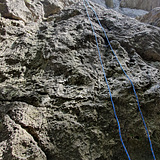
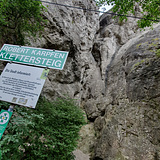
Direkt neben der Straße gelegen und nordwestlich ausgerichtet, kann man hier ideal einen warmen Sommertag beginnen lassen. Die Routen sind bis zu 35 Metern lang, und auch die Schwierigkeiten von 2 bis 8a+ bieten jedem Kletterer die entsprechende Herausforderung. Von plattigen, mit Henkel gesegneten Routen bis hin zur fingerlastigen Wandkletterei ist alles zu finden. Sogar das ein oder andere Dach muss überwunden werden. Gesichert wird meist vom asphaltierten Radweg aus. Hier bitte Rücksicht auf die Radfahrer nehmen und keine Gegenstände am Weg liegen lassen. Auch ein Spielplatz, Trinkwasser und eine WC-Anlage sind vorhanden. Außerdem befindet sich im rechten Wandteil ein Klettersteig, der ebenfalls zum Gipfel führt.
Erikagrat
Nicht ganz so beliebt wie der Efeugrat, finden sich jedoch auch hier gut abgesicherte Routen bis zum Grad 7a und bis zu 25 Metern Höhe. Wie sein Nachbar ist der Erikagrat nordwestlich ausgerichtet. Besonders hervorzuheben ist die Gratüberschreitung im 3. Schwierigkeitsgrad, bei der zukünftige Alpinisten ihre Mehrseillängenkünste erstmals üben können.
Glocknergrat
Der Glocknergrat ist eine Ansammlung von Graten und Türmen, die sowohl ost- als auch westseitig ausgerichtet sind. Wie in den anderen Sektoren von Mödling ist die Absicherung hervorragend, und die Routen, die bis zu 30 Meter lang sind, siedeln sich zumeist im 6. französischen Grad an. Der Kletterstil bietet hier eine gute Abwechslung von Löchern und Leisten in allen möglichen Wandneigungen. Auch hier ist die Gratüberschreitung eine tolle alpine Übung mit bester Absicherung.
Lausbubenwände und Lausbubenpfeiler
Unfern des Efeugrates befinden sich die nord- bis westseitig ausgerichteten Lausbubenwände und der Pfeiler. Die Routen sind kurz bis sehr kurz (maximal 18 Meter); am Lausbubenpfeiler gibt es jedoch Anstiege bis zu 20 Metern. Auch die Schwierigkeiten sind, bis auf einige Ausnahmen, eher moderat und reichen von 6a bis 6c. Man klettert hier meist an Leisten, und manchmal muss auch ein kleineres Dach überwunden werden.
Ritterfels
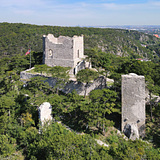
Diese kleine Nordwand liegt unter der Burgruine Mödling und bietet ein paar nette Routen im Grad 6a+ bis 6c. Sie ist auf jeden Fall einen Besuch wert.
Promenadenfels
Dieser kleine Block auf dem Weg zum Glocknergrat hat neben seinen zwei Bouldertraversen nun auch ein paar kurze Routen dazu bekommen.
English
The walls west of the city of Mödling are by no means new climbing routes; climbing has been taking place here for over 100 years. The good public transport connection, the short and child-friendly approach, as well as the excellent protection attract many climbers from Vienna to these walls near Mödling. As a result, one is usually not alone on weekends, and popular routes show clear signs of use after all these years.
Efeugrat
Located directly next to the road and facing northwest, it is ideal to start a warm summer day here. The routes are up to 35 meters long, and the difficulties range from 2 to 8a+, offering each climber the appropriate challenge. From slabby routes blessed with jugs to fingery wall climbing, everything can be found here. Even the occasional roof needs to be overcome. Most climbing is done from the paved bike path, so please be considerate of cyclists and do not leave any objects on the path. There is also a playground, drinking water, and a toilet facility available. Additionally, there is a via ferrata in the right part of the wall that leads to the summit.
Erikagrat
Not quite as popular as the Efeugrat, the Erikagrat also offers well-protected routes up to grade 7a and heights of up to 25 meters. Like its neighbor, the Erikagrat is oriented northwest. Particularly noteworthy is the ridge crossing at the 3rd degree of difficulty, where aspiring alpinists can practice their multi-pitch climbing skills for the first time.
Glocknergrat
The Glocknergrat is a collection of ridges and towers that are oriented both east and west. As in the other sectors of Mödling, the protection is excellent, and the routes, which are up to 30 meters long, mostly fall into the 6th French grade. The climbing style here offers a good variety of holds and features in all possible wall inclinations. The ridge crossing is also a great alpine exercise with excellent protection.
Lausbubenwände and Lausbubenpfeiler
Near the Efeugrat, the Lausbubenwände and the pillar, which are oriented from north to west, can be found. The routes are short to very short (max 18 meters); however, the Lausbubenpfeiler has ascents of up to 20 meters. The difficulties are mostly moderate, ranging from 6a to 6c, with a few exceptions. Climbers typically ascend on edges and may need to overcome a smaller roof at times.
Ritterfels
This small north face lies beneath the Mödling castle ruins and offers a few nice routes in the grade range of 6a+ to 6c. It is definitely worth a visit.
Promenadenfels
This small block on the way to the Glocknergrat now has a few short routes added to its two bouldering traverses.