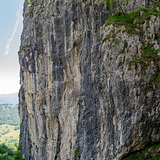
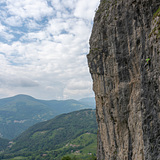
È "la Parete" per antonomasia dei Denti della Vecchia e deve il suo nome all'evidente spigolo di oltre 100 metri ď'altezza, che si trova sul lato sinistro all'imbocco del Canalone. Qui troviamo i maggiori itinerari storici del luogo quali la Direttissima, lo Spigolone e il Gran Diedro. La piccola storia delľarrampicata ai Denti della Vecchia è ricca di aneddoti nati su queste vie dove le varie generazioni (per lo più ignorandosi l'una con ľaltra) hanno di volta in volta fatto progredire il limite delle dicoltà superate in arrampicata libera. Sulla destra la parete forma una serie caratteristica di diedri dove passano le vie classiche, mentre in tempi recenti sono stati chiodati numerosi monotiri sulle placche verticali che formano appunto le facce dei diedri medesimi. La roccia è molto solida ed essenzialmente verticale; solo le vie di più tiri presentano brevi tratti con roccia meno buona o passaggi erbosi. I sole durante l'estate raggiunge tutti i diedri in tarda mattinata, ma già ad inizio autunno le vie più a destra rimangono all'ombra praticamente tutto il giorno. Sulle vie del settore Spigolone il rocciatore troverà un ampio ventaglio di possibilità in grado di soddisfare le diverse esigenze, si consiglia di combinare una via sullo spigolo al mattino con qualche monotiro al pomeriggio.
It is "the Wall" par excellence of the Denti della Vecchia and owes its name to the obvious edge of over 100 meters in height, which is located on the left side at the mouth of the Canalone. Here we find the major historical routes of the place such as the Direttissima, the Spigolone and the Gran Diedro. The short history of climbing at the Denti della Vecchia is full of anecdotes born on these routes where the various generations (mostly ignoring each other) have from time to time advanced the limit of the difficulties overcome in free climbing. On the right the wall forms a characteristic series of dihedrals where the classic routes pass, while in recent times numerous single pitches have been bolted on the vertical slabs that form the faces of the dihedrals themselves. The rock is very solid and essentially vertical; only the multi-pitch routes have short sections with less good rock or grassy passages. During the summer the sun reaches all the dihedrals in the late morning, but already at the beginning of autumn the routes further to the right remain in the shade practically all day. On the routes in the Spigolone sector the climber will find a wide range of possibilities able to satisfy different needs, it is advisable to combine a route on the edge in the morning with some single pitches in the afternoon.