⚠️ No phone connection, download the topo before ⚠️
☀️ SUN DURING THE DAY:
• All Day
📱 PHONE SIGNAL:
NO, download the guide before
🧭 EXPOSURE:
• Fully South
🌧️CLIMBABLE IN THE RAIN:
•NO
🧱ROCK TYPE: The rock here is very high quality Limestone.
📆 BEST PERIOD:
Spring - Autumn and in very sunny day Winter
03 to 06 and 09 to 11
👪 FAMILY FRIENDLY:
YES
🇬🇧
⛰️
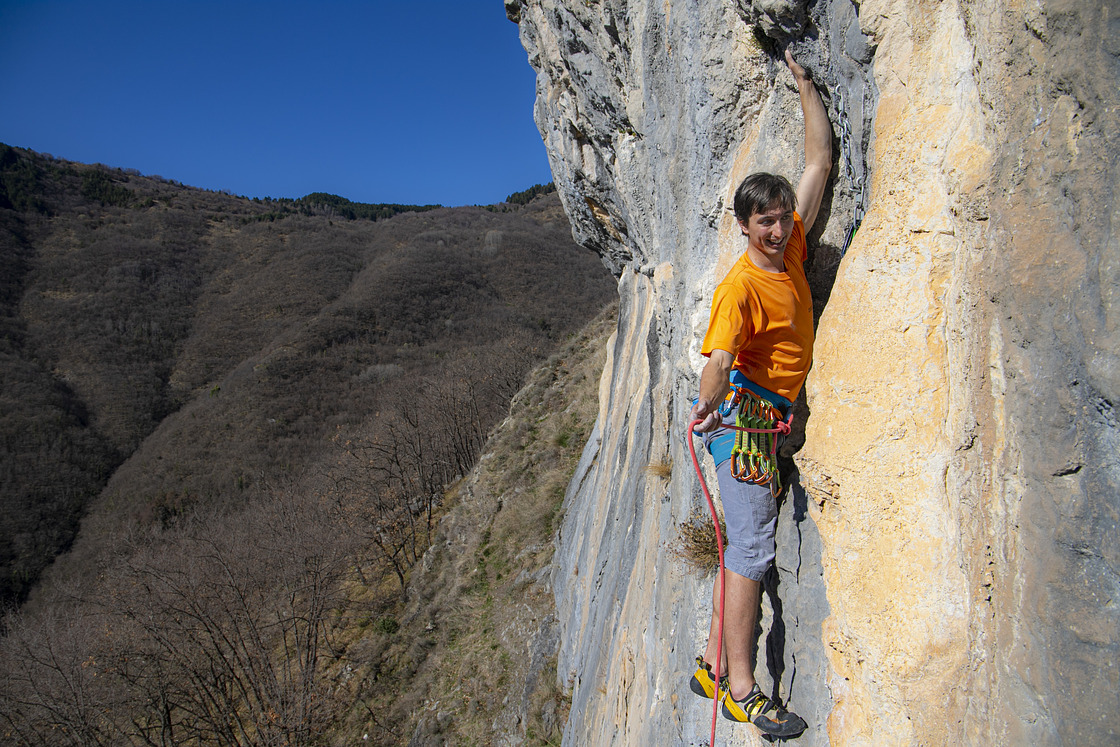
The crag is located at 1300 meters of altitude, with excellent southern exposure and short approaches: it only takes about 10 minutes of walking to reach the base of the sectors. It is well sheltered from the cold northern winds and enjoys sunshine from early morning until late afternoon. This makes it ideal for climbing in spring and autumn, though less suitable in summer due to the heat.
During dry winters with no snow, on clear days and with a favorable freezing level, climbing is sometimes possible even during the Christmas holidays, right up to the last days of the year.
The place is fascinating both for the quality of the rock—solid, well-sculpted, and varied—and for its panoramic position high above the valley. It’s a silent and timeless location, offering more than just climbing: a true mountain immersion.
Most routes exceed 25–30 meters, and some even have a second pitch that requires rappelling to descend. The routes are generally well bolted, although a few moves can be mandatory. Some lines require up to 20 quickdraws.
Because of their length, a full day can easily be spent on just a few routes. A 70-meter rope is usually sufficient, but for one route in particular—Occhio alla quarzite—you must pay attention, as it’s right at the limit of rope length.
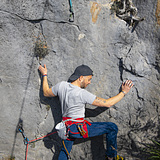
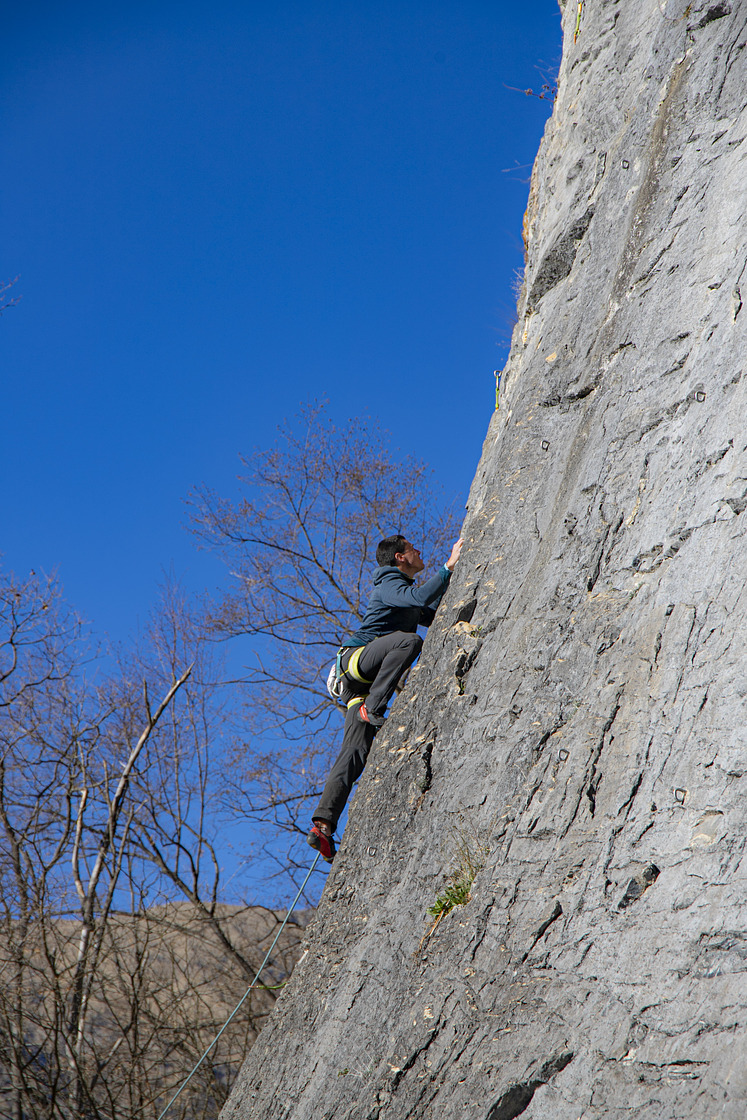
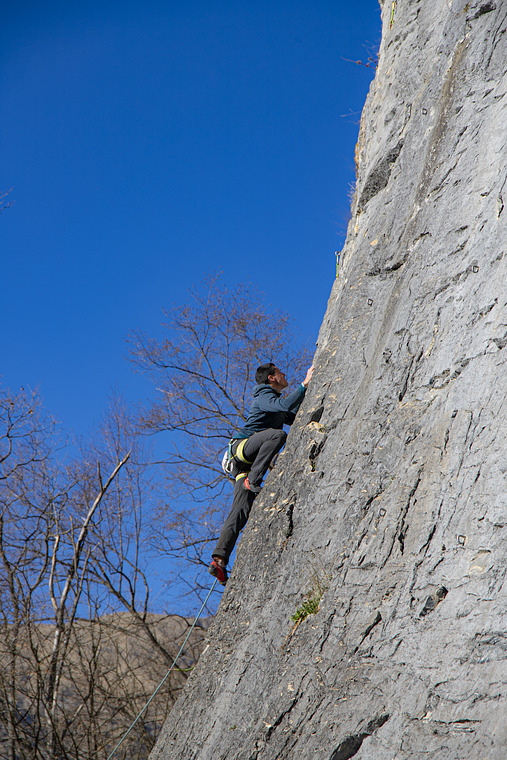
The rock is light grey limestone with outstanding grip—perfect for technical and sustained slab climbing. The smooth wall features gentle curves, with pockets, holes, and striking quartzite formations that add variety and character to the routes.
Route names are clearly marked at the base, near each starting point, making navigation straightforward.
🇮🇹
⛰️
La falesia si trova a 1300 metri di altitudine, con un’ottima esposizione a Sud e accessi brevi: bastano circa 10 minuti di cammino per raggiungere la base dei settori. È ben riparata dai venti freddi del Nord e riceve il sole fin dalle prime ore del mattino, accompagnandolo fino a tardi nel pomeriggio. Questo la rende ideale per l’arrampicata in primavera e in autunno, ma poco adatta nei mesi estivi per via del caldo.
In inverno, quando la stagione è secca e senza neve, con giornate serene e uno zero termico favorevole, può capitare di arrampicare anche durante le vacanze natalizie, fino agli ultimi giorni dell’anno.
Il luogo è affascinante sia per la qualità della roccia—solida, scolpita e varia—sia per la sua posizione dominante sulla valle. È un posto silenzioso, sospeso nel tempo, dove l’esperienza va oltre l’arrampicata, regalando un’immersione autentica nella montagna.
Le vie sono quasi tutte oltre i 25-30 metri e alcune presentano anche una seconda lunghezza, dalla quale è necessario scendere in doppia. I tiri sono generalmente ben protetti, anche se in certi casi alcuni movimenti sono obbligati. In diverse vie servono fino a 20 rinvii.
La lunghezza delle linee permette di passare l’intera giornata su pochi tiri, immergendosi pienamente nell’esperienza verticale. Una corda da 70 metri è in generale sufficiente, ma per una via in particolare—Occhio alla quarzite—occorre fare attenzione: si è proprio al limite del fine corda.
La roccia è un calcare grigio chiaro dal grip sorprendente, ideale per una scalata di placca tecnica e continua. La parete, liscia e scolpita da dolci ondulazioni, è arricchita da erosioni, fori e suggestive venature di quarzite che rendono ogni tiro interessante e mai banale.
I nomi delle vie sono ben visibili alla base, vicino alla partenza, per un orientamento semplice e immediato
🇫🇷
⛰️
La falaise se situe à 1300 mètres d’altitude, avec une excellente exposition au sud et un accès rapide : il suffit d’environ 10 minutes de marche pour atteindre le pied des secteurs. Elle est bien protégée des vents froids du nord et bénéficie du soleil dès le matin jusqu’en fin d’après-midi. Cela en fait un lieu parfait pour grimper au printemps et en automne, mais moins adapté en été à cause de la chaleur.
Pendant les hivers secs, sans neige, avec des journées claires et un bon zéro thermique, il est parfois possible de grimper même pendant les fêtes de Noël, jusqu’aux derniers jours de l’année.
C’est un lieu fascinant, tant pour la qualité de la roche—solide, sculptée et variée—que pour sa position dominante sur la vallée. Un endroit silencieux, hors du temps, où l’on vit une expérience au-delà de la grimpe : une véritable immersion en montagne.
La majorité des voies dépasse les 25–30 mètres, et certaines possèdent même une seconde longueur, nécessitant une descente en rappel. L’équipement est en général bon, bien que certains passages soient obligatoires. Certaines voies demandent jusqu’à 20 dégaines.
La longueur des lignes permet de passer une journée entière à grimper quelques voies seulement. Une corde de 70 mètres suffit dans la plupart des cas, mais sur une voie en particulier—Occhio alla quarzite—il faut faire très attention : on est à la limite de la longueur de corde.
La roche est un calcaire gris clair à l’adhérence remarquable, parfaite pour une escalade en dalle technique et régulière. La paroi, lisse et modelée par des ondulations douces, présente des trous, des érosions et de superbes formations de quartzite qui donnent à chaque voie son caractère unique.
Les noms des voies sont clairement indiqués à la base, près de leur départ, pour une orientation facile.