☀️SUN DURING THE DAY:
• In the afternoon.
💧WATER SOURCE:
• YES along the road heading the parkings.
🧭 EXPOSURE:
• North-West and South-West.
🧱ROCK TYPE:
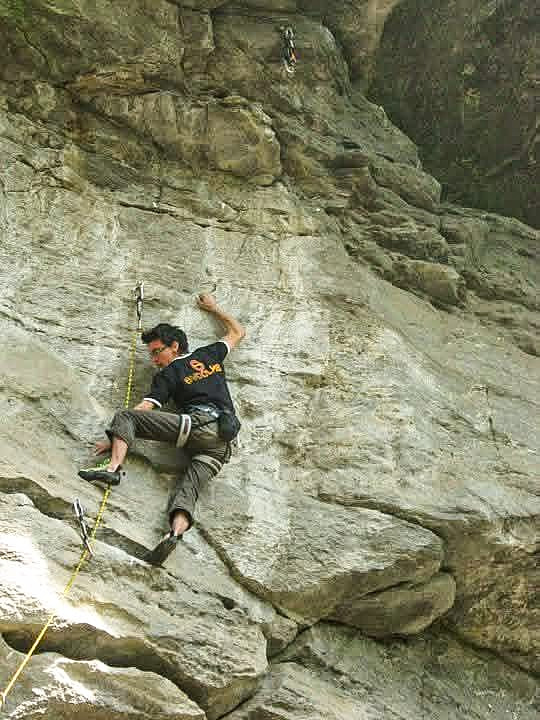
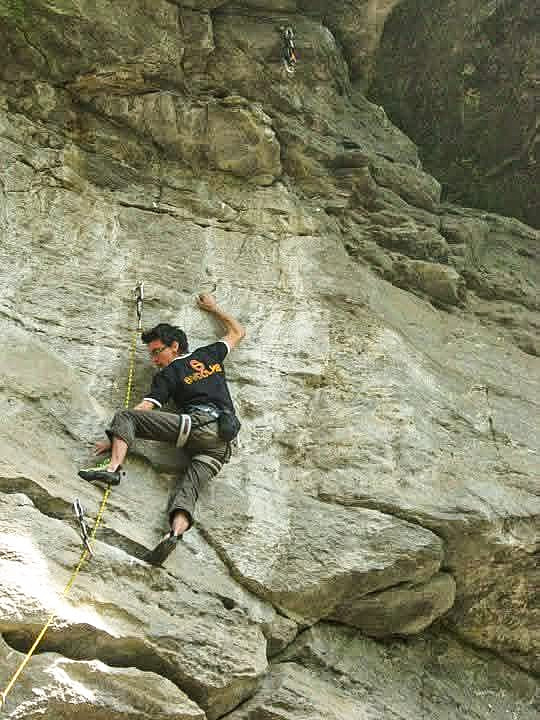
•The rock here is a good quality Gneiss.
📆 BEST PERIOD:
• April, May, June, September and October.
👪 FAMILY FRIENDLY:
• NOT REALLY
📱PHONE SIGNAL:
• YES
🇬🇧
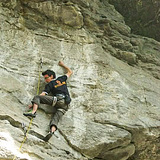
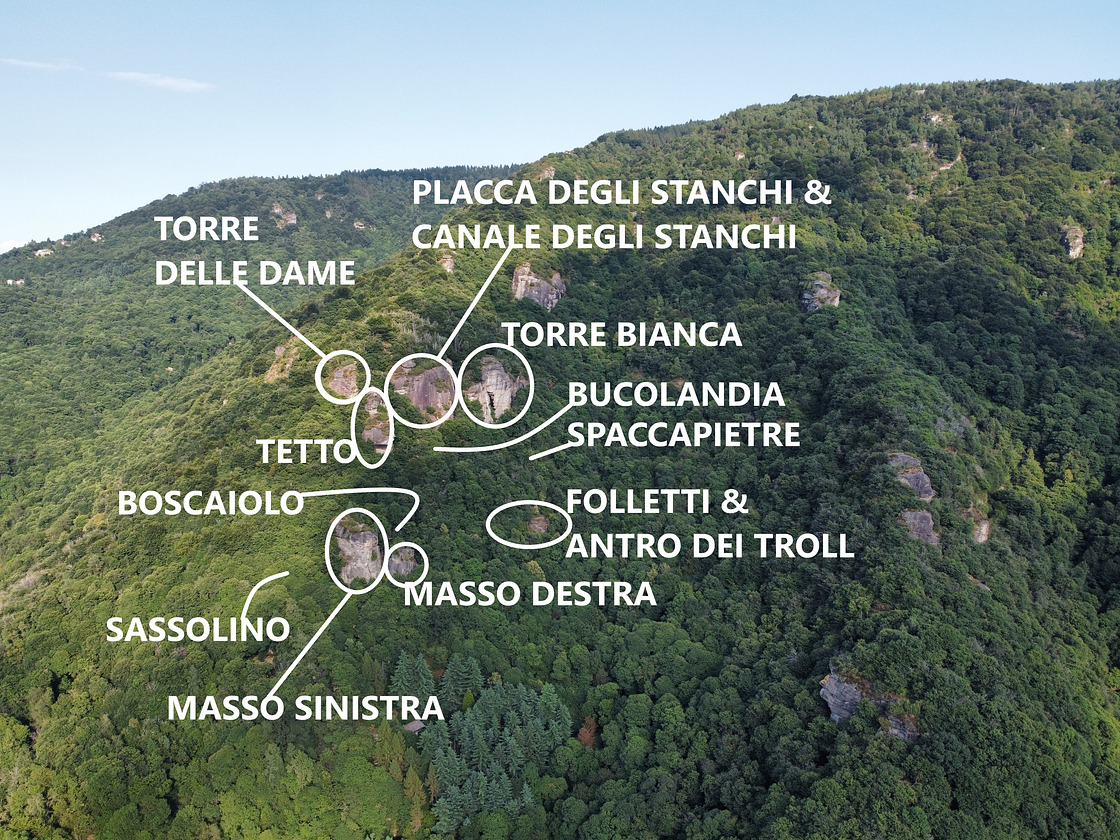
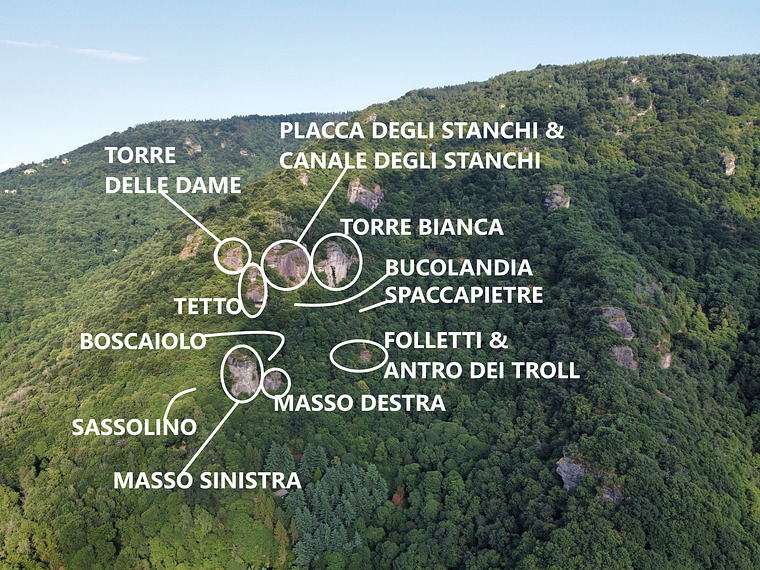
⛰️Located at around 600 meters above sea level and nestled in a peaceful little forest, this crag offers a quiet and varied climbing experience in a beautiful natural setting. With 15 sectors and approximately 300 routes, it caters to a wide range of climbers, featuring grades from 4 up to 8a+, and route lengths between 10 and 40 meters. The lines are well equipped with bolts and glue-ins, and the anchors are generally chains with maillons—some of them also feature lowering carabiners.
Climbing styles vary from technical walls to compact slabs and powerful overhangs, all on solid granitoid gneiss that provides reliable friction and enjoyable movement. Many of the older routes have been rebolted with care by experienced local developers such as M.C., M.C., Franco Giacottino, Flavio Parussa, and Silvano and Fede from Pinerolo.
The crag faces predominantly northwest, staying shaded in the morning and catching the sun in the afternoon—ideal for climbing year-round, though summer afternoons can get quite hot. From the top of the cliff, you’ll be rewarded with a stunning view of Monviso, making every effort well worth it.
Perfect for climbers looking for peace, variety, and well-bolted lines, this crag is a true hidden gem. The only drawback? The afternoon heat in summer—easily avoided by climbing in the morning.
🇮🇹
⛰️Situata a circa 600 metri di altitudine, immersa in un tranquillo boschetto ai piedi delle montagne piemontesi, questa falesia rappresenta una meta ideale per chi cerca un’arrampicata varia e in un contesto silenzioso e rilassante. Con i suoi 15 settori e circa 300 vie tracciate, offre una gamma di difficoltà che spazia dal 4 all’8a+, su lunghezze comprese tra i 10 e i 40 metri. Le linee, ben attrezzate con spit e resinati, conducono a soste solide con catena e maillon, alcune delle quali sono dotate di moschettone per la calata.
Il tipo di arrampicata è piuttosto diversificato: si passa da muri tecnici a placche compatte fino a strapiombi fisici, il tutto su un gneiss granitoide di buona qualità che garantisce un’ottima aderenza e varietà nei movimenti. La richiodatura delle vie storiche è stata curata con attenzione da chiodatori esperti come M.C., M.C., Franco Giacottino, Flavio Parussa, Silvano e Fede di Pinerolo, a testimonianza di una comunità appassionata e attenta alla sicurezza.
L’esposizione prevalente è a nord-ovest: la parete resta in ombra durante la mattinata, offrendo condizioni ideali nelle giornate più calde, mentre al pomeriggio si scalda con il sole — un vantaggio nelle mezze stagioni ma da considerare con cautela durante i mesi estivi. In cima alla falesia, la vista si apre generosa sul Monviso, regalando un colpo d’occhio magnifico che ripaga ogni sforzo.
Ideale per l’arrampicata durante tutto l’anno, questa falesia è perfetta sia per chi cerca tranquillità nel verde che per chi desidera cimentarsi su vie tecniche e ben protette. L’unico vero svantaggio? Il caldo pomeridiano nei mesi estivi — facilmente evitabile iniziando a scalare al mattino.